













Disclaimer: The views and opinions expressed in this article are those of the author and do not necessarily reflect the official policy, position, or views of the newspaper, its editorial board, management, or staff.
We are living through a hinge moment for Canada’s economy and our place in the
world.
As the Prime Minister said recently in Davos, this is a rupture, not a transition. Long standing assumptions about global trade, multilateralism, energy security, and economic partnerships no longer hold.
The old order is not coming back, and nostalgia is not a strategy. So the question facing Canada is straightforward: how do we respond?
My recent trip to India was part of our answer.
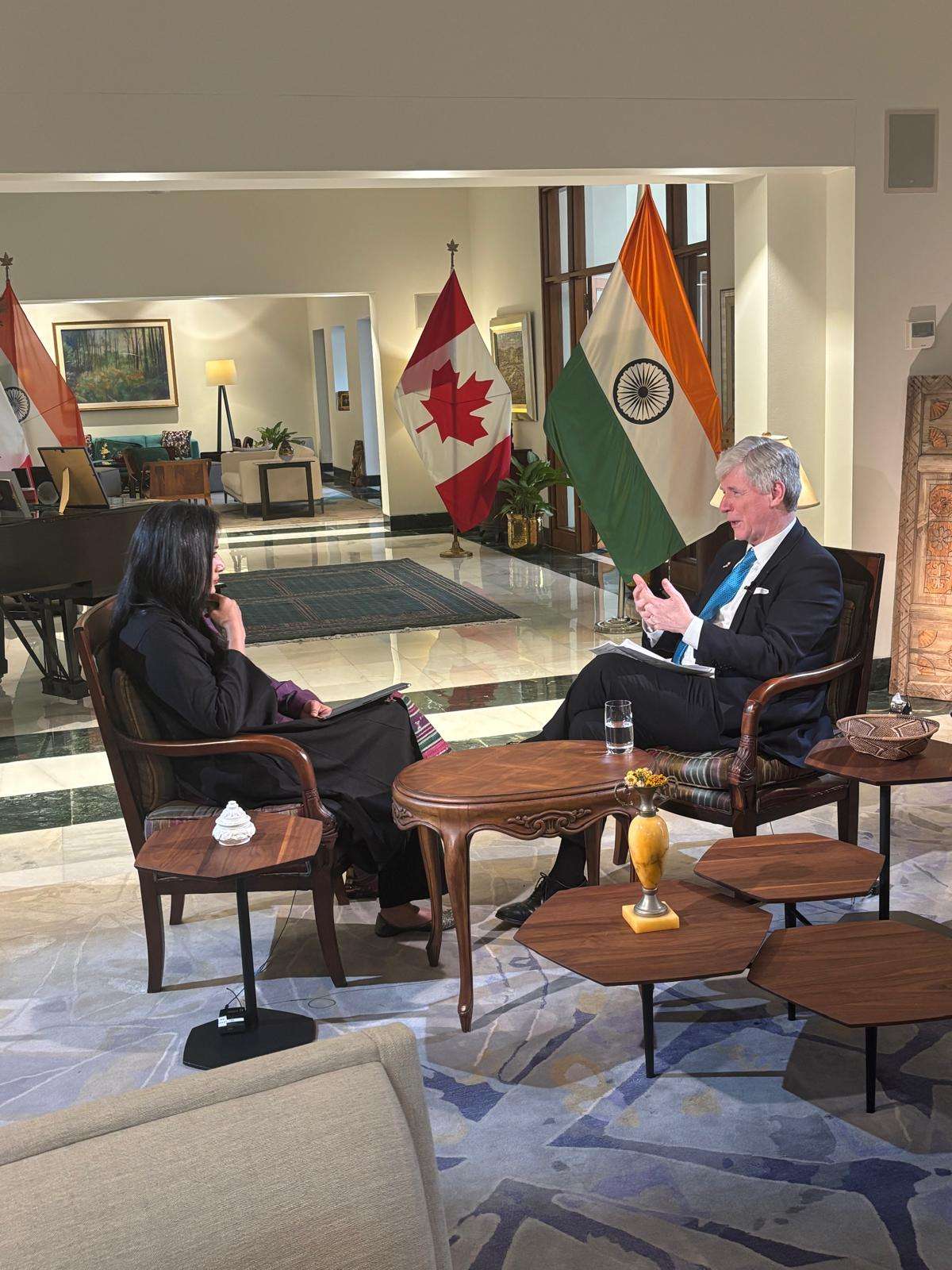
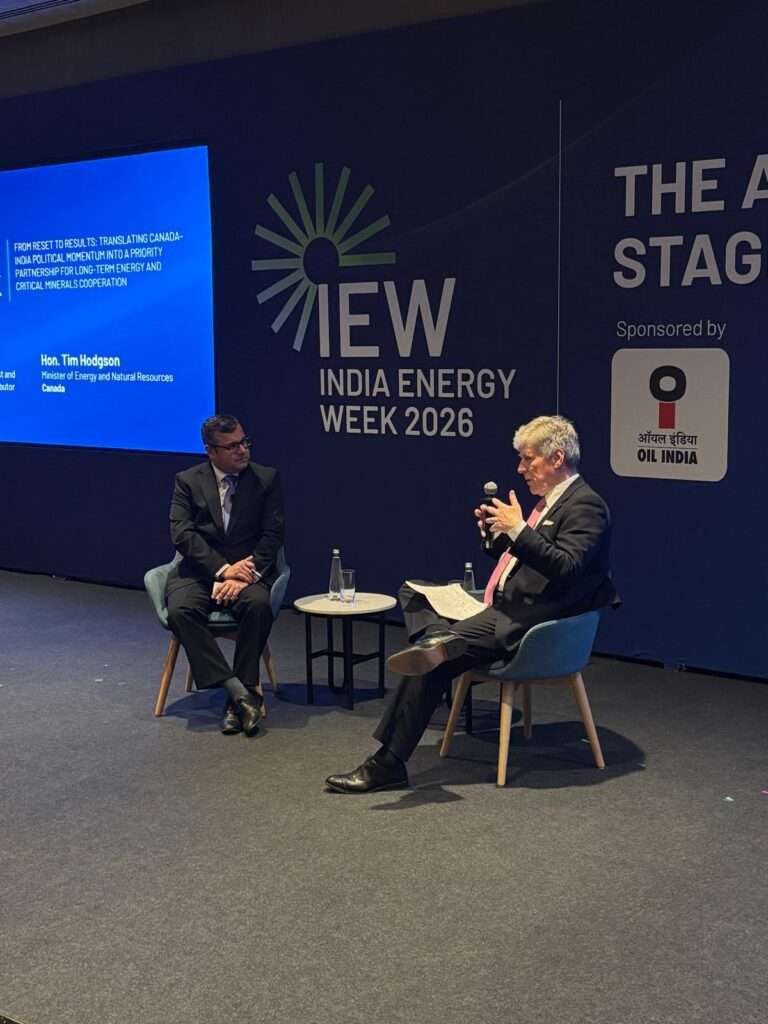
Earlier this month, I represented Canada at India Energy Week in Goa and met with Indian ministers, industry leaders, and global energy partners in New Delhi to discuss trade opportunities that will play a key role in the reset and strengthening of Canada-India relations.
This was the first time a Canadian federal minister has attended India Energy Week — and that matters. It signals a clear shift in how Canada is engaging with one of the most consequential economies of this century.
For Canadians — and especially for the many families in Markham–Thornhill with deep ties to India — this visit was critical. It reflects Canada’s commitment to diversification, to resilience, and to building long-term prosperity in a changing world.
India is already the fastest-growing major economy on the planet. It is also the country with the fastest-growing energy demand, roughly equal to China and Southeast Asia combined. By 2040, India’s energy consumption is expected to more than double. It is pretty clear: if Canada is serious about being an energy superpower, we have to be serious about India.
Today, Canada and India’s two-way trade exceeds $23 billion annually and supports hundreds of thousands of jobs in both countries. It is supported by the close people-to people ties between our two nations. But we are nowhere near the ceiling of what is possible. That is why under Prime Minister Carney, we have restarted negotiations on a Comprehensive Economic Partnership Agreement, or CEPA, which is expected to more than double bilateral trade to $70 billion by 2030. Energy, critical minerals, clean technology, agriculture, and advanced manufacturing will all be central to that agreement, and growing Canada-India trade and investment.
My objective during my trip to India was simple: turn Canada’s competitive advantages into future trading opportunities.
In Goa, I met with Minister Hardeep Singh Puri, India’s Minister of Petroleum and Natural Gas, where we officially reinstated the Canada–India Ministerial Energy Dialogue. This renewed dialogue creates a sustained government-to-government platform focused on bringing clean and conventional Canadian energy – areas where Canada has world-class products to sell and India has enormous demand – to India.
Restarting the Ministerial Dialogue may sound like government-speak. But this matters because India’s energy sector is largely state-directed. Clear policy alignment and an endorsement of Canada by Minister Puri sends a powerful signal to Indian buyers and investors that Canada is open for business and a priority market for them to look to as they scale up to meet national demand.
On LNG alone, India aims to increase the share of natural gas in its energy mix to 15 percent by 2030, up from roughly six percent today. Beginning this past June, Canada has started shipping LNG from our west coast, so we are well-positioned to help meet that demand with reliable, responsibly-produced LNG, supporting India’s energy security while lowering global emissions.
Beyond oil and gas, while in New Delhi, I met with India’s Ministers of New and
Renewable Energy, Heavy Industries, and Chemicals and Fertilizers. Our discussions covered clean power deployment, industrial decarbonization, fertilizer supply chains, critical minerals, electric vehicles, and advanced manufacturing. In each case, the message was clear: Canada has what India needs, and India offers a market that provides significant opportunities for Canadian companies.
On critical minerals, we made tangible progress. India recently launched a $4-billion National Critical Minerals Mission to secure inputs like lithium, copper, and cobalt — minerals Canada produces to some of the highest environmental and labour standards in the world. We agreed to formalize cooperation between our two countries in the coming weeks, and I was pleased to invite India’s Minister of Mines to attend the PDAC mining conference in Toronto this March.
Ultimately, this trip reflects Canada’s new, pragmatic approach to global engagement: building strength at home while diversifying abroad, so we are never dependent on any single market again.
Canada is a stable democracy, a trusted supplier, and a dependable long-term partner in an increasingly volatile global economy. We have low-cost, low-carbon energy. We have responsibly sourced critical minerals. And with our Pacific gateway now fully open, we are well-positioned to serve growing Asian markets like India.
Strengthening our relationship with India is not optional. It is essential to Canada’s economic resilience, our energy leadership, and our future prosperity. This visit helped put the relationships, policy frameworks, and commercial pathways in place to deliver real results — for workers, for businesses, and for communities across Canada.
In a world defined by uncertainty, Canada is choosing its own path, and building a strong, prosperous country for everyone.

