













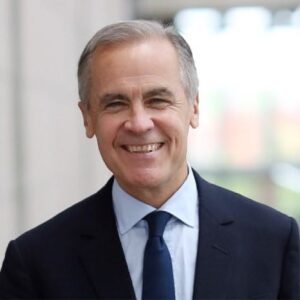
Prime Minister Mark Carney says Canada should not expect a near-term breakthrough to end U.S. tariffs on steel, aluminum, autos and other key sectors, indicating that negotiations are now likely to be folded into a broader renegotiation of the continental trade pact.
Speaking in Ottawa on Thursday, ahead of signing an agreement with Ontario Premier Doug Ford to accelerate infrastructure approvals, Carney said talks over President Donald Trump’s sector-specific tariffs are expected to roll into the upcoming review of the United States–Mexico–Canada Agreement, known as CUSMA in Canada and USMCA in the United States.
That review is anticipated to take place next year, though no firm timeline has been set — raising the possibility that tariffs could remain in place for another year or longer, continuing to weigh on major segments of Canada’s economy.
“My judgment is that that is now going to roll into the broader CUSMA negotiations,” Carney said, adding that given the overlapping timelines, a stand-alone sectoral deal is now unlikely.
Canada and the U.S. were engaged in tariff negotiations until October, when Trump abruptly halted talks following the airing of an Ontario government anti-tariff advertisement on U.S. television. Ford later withdrew the ad at Carney’s request.
Despite the setback, Carney said Canada remains open to a separate agreement if Washington is willing to return to the table. He noted that negotiations had been close to a resolution before collapsing.
“We were close to an agreement. We didn’t get that agreement,” Carney said. “The terms of that agreement, from our perspective, are still on the table. If the United States wanted to sit down this weekend, we could sit down this weekend.”
Previous reporting by the media indicated the proposed deal would have imposed quotas and tariffs on Canadian steel exports to the U.S.
Meanwhile, U.S. Trade Representative Jamieson Greer this week outlined the Trump administration’s priorities for USMCA talks in a submission to Congress. He identified Canada’s supply-managed dairy system and the Online Streaming Act — which allows Canadian regulators to impose domestic content requirements on U.S. streaming platforms — as top concerns.
Other irritants listed included the Online News Act, provincial procurement rules that favour local firms, and provincial bans on U.S. liquor imposed in response to American tariffs.
At the same time, Greer signalled interest in a more integrated “Fortress North America” approach in areas such as stricter rules of origin for industrial goods, a shared critical minerals marketplace, and closer alignment of tariff and investment policies among the three countries.
It remains unclear how such proposals align with Trump’s broader protectionist agenda, particularly efforts to unwind existing integration in sectors like autos. The approach could also conflict with Carney’s stated goal of reducing Canada’s reliance on the U.S. economy by expanding trade ties elsewhere.
Notably absent from Greer’s presentation were references to steel, aluminum, autos and lumber — four Canadian sectors currently facing significant U.S. tariffs.
Brian Clow, a former adviser to ex-prime minister Justin Trudeau during the last USMCA negotiations, said Greer’s tone suggests an interest in renegotiation rather than dismantling the trade pact altogether.
“His tone is encouraging, in that it doesn’t sound like he wants to blow up the USMCA,” Clow said, while cautioning that Trump ultimately controls the file and could raise additional demands.
Carney described Greer’s submission as only “a subset of issues of a much larger discussion,” noting that he, Trump and Mexican President Claudia Sheinbaum set broad negotiating parameters earlier this month during a meeting at the FIFA World Cup draw in Washington.
While Carney said he still hopes talks could deepen economic integration — particularly in auto and aerospace manufacturing — he warned that Canada is prepared to pursue opportunities with other partners if the U.S. resists cooperation.
Highlighting planned critical minerals development in Ontario’s Ring of Fire region, Carney said it represents “a potential opportunity for the United States, but it is not an assured opportunity.”
Ford, for his part, said Ontario will continue keeping U.S. alcohol off government-run liquor store shelves until a broader trade agreement is reached.
“When the Prime Minister and President Trump come up with a great deal for both countries, we’d be more than happy to bring in some Kentucky bourbon,” Ford said. “But until then, we’re going to hold off.”
The premier also defended the now-pulled anti-tariff advertisement, calling it “the best ad that’s ever been run,” as Carney laughed beside him. “If President Trump hadn’t commented on it,” Ford added, “it might have had 12.4 people viewing it instead of 12.4 billion.”

