













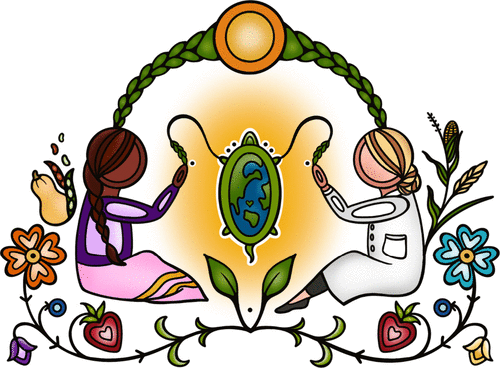
With global progress on the United Nations’ Sustainable Development Goals stalling at just 17% (per cent), new research from Algoma University emphasizes the urgent need for collaborative approaches that elevate Indigenous knowledge systems that have long been overlooked.
Published in the influential American Chemical Society journal Sustainable Chemistry & Engineering, the peer-reviewed article “Braiding Knowledge Systems: Integrating Indigenous Wisdom and Sustainable Research for a Regenerative Future” centres on practical, relatable ways of thinking: planning for the next seven generations, and moving from isolated approaches toward collaborative, place-based models that centre Indigenous knowledge.
“This work shows that sustainability is not only about innovation, it is also about relationships and responsibility,” said Dr. Brett Goodwin, Interim Vice-President, Academic and Research at Algoma University. “By bringing knowledge holders and researchers together, and leaning on their expertise, we can better understand how to care for the land in ways that are both practical and lasting.”
Key principles highlighted in the research include planning for future generations, treating the land as a relative rather than a resource, and ensuring that research contributes positively to the environments and communities they engage with.
The study emerged from a collaborative workshop in Baawaating (Algoma District), where knowledge holders, researchers, and community leaders came together, including members from Ketegaunseebee (Garden River First Nation) and Batchewana First Nation. The collaborative work also reflects the ongoing efforts of Bimosen Anishinaabe Miikana, an Algoma University collective focused on advancing decolonization and strengthening relationships with Indigenous communities.
“Algoma University’s Special Mission calls us to walk alongside Indigenous communities in ways grounded in respect, responsibility, and shared learning,” said Martin Bayer, Vice-President, Nyaagaaniid Anishinaabe Initiatives, Equity, Diversity and Inclusion at Algoma University. “ A fundamental part of this mission is our responsibility to provide cross-cultural education to our partners and to deepen understanding of Anishinaabe ways of knowing. This includes recognizing the importance of our relationship to the land and its sacredness. It is this relationship that distinguishes Indigenous Peoples within the Canadian context and affirms our unique place in the fabric of this country. Sharing this knowledge is essential to advancing meaningful reconciliation. By listening, building trust, and sharing knowledge of Anishinaabe ways of knowing, we create space for meaningful change and advance true reconciliation.”
Co-authored by faculty, researchers, and community partners from across the Great Lakes-St. Lawrence River system and Turtle Island, the article demonstrates how Indigenous-led, place-based collaboration can inform global conversations in sustainability science.
Corresponding Authors:
Elizabeth Edgar-Webkamigad: Founder~Lead NaanookshkaaNs Do Kinoomaagewin Hummingbird Teaching and Consulting; Anishinaabe Studies, Faculty of Social Science and Humanities, Algoma University
Dr. Jody-Lynn Rebek: Department of Business Administration, Faculty of Business and Economics, Algoma University
Dr. Audrey Moores: Centre in Green Chemistry and Catalysis, Department of Chemistry, McGill University
Authors
Dr. Michael R. Twiss: Department of Biology, Cameron Faculty of Science, Algoma University
Dr. Pedro Madeira Antunes: Department of Biology, Cameron Faculty of Science, Algoma University
Isabelle Aubin: Great Lakes Forestry Centre, Canadian Forest Service, Natural Resources Canada
Dr. Isabel Molina: Department of Biology, Cameron Faculty of Science, Algoma University
Jordan M. Barone: Department of Business Administration, Faculty of Business and Economics, Algoma University
Aaron Jones: Lands and Resources Department, Ketegaunseebee (Garden River First Nation)

