













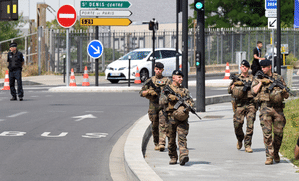
France is facing widespread unrest as student-led demonstrations over deteriorating school conditions, teacher shortages and education funding have escalated into a nationwide protest movement, disrupting hundreds of schools and prompting clashes with police.
The demonstrations, which began at a high school near Paris in mid-September, have expanded across the country, drawing support from teachers, parents and labour unions.
According to France’s Interior Ministry, more than 250,000 people participated in demonstrations on Tuesday, October 6, including approximately 56,000 in Paris. Protest organizers estimated nationwide participation at 450,000.
The protests represent a major challenge for outgoing President Emmanuel Macron’s government, with Prime Minister Sébastien Lecornu promising new measures by the end of October to address students’ concerns.
A government platform launched to collect student complaints has already received approximately 40,000 submissions.
At the centre of the demonstrations are longstanding concerns about the condition of France’s public education system.
Students have reported overcrowded classrooms, deteriorating buildings, inadequate staffing and frequent cancellations of classes because of teacher shortages.
According to a survey conducted by a secondary school teachers’ union, more than half of French schools are experiencing staffing shortages this academic year.
The problem has persisted for nearly a decade, with schools struggling to recruit substitute teachers and replace absent staff. In some cases, students have reportedly missed hundreds of hours of instruction.
Class sizes have also increased, with many classrooms accommodating between 25 and 30 students.
Students have described buildings affected by pest infestations, poor insulation and extreme temperatures, particularly during summer heat waves.
The demonstrations initially gained momentum in economically disadvantaged suburbs surrounding Paris, where schools have historically faced resource shortages and growing student populations.
Although education receives a significant share of France’s government spending, critics argue that investment has failed to keep pace with demographic changes and infrastructure needs.
The country’s youth population is expected to peak in 2028, adding further pressure to an already strained education system.
Teacher recruitment has become another major concern, with education experts pointing to declining salaries relative to the minimum wage.
In 1980, starting salaries for teachers were more than twice the minimum wage. Today, entry-level teachers earn only slightly more, contributing to difficulties attracting new professionals to the sector.
Students are demanding increased recruitment of teachers, school nurses and educational assistants, along with urgent renovations to aging school facilities.
Many are also calling for changes to lengthy school schedules, which can extend from 8:30 a.m. until 6 p.m.
Another source of frustration is Parcoursup, France’s national university admissions platform, which allows students to submit applications to up to 10 higher education institutions.
Critics argue that the selection process lacks transparency and have demanded significant reforms.
Despite discussions between student representatives and Education Minister Édouard Geffray, negotiations have failed to produce an agreement, prompting continued school blockades.
The government has announced an additional €1.2 billion in education funding for next year, although opposition parties argue that the increase will do little more than offset inflation.
Meanwhile, the demonstrations have caused significant disruption across France.
Hundreds of schools have been blockaded since September, while more than 5,000 people have been arrested in connection with the unrest.
Although most demonstrations have remained peaceful, some have involved vandalism, property destruction and confrontations with police.
Education Minister Geffray said more than 200 people have been injured during the protests, including injuries linked to accidents and violent incidents.
Authorities also reported that 24 schools had been burned or vandalized as of Sunday.
The police response has generated widespread criticism, particularly following reports of serious injuries involving teenage demonstrators.
One young protester reportedly lost sight in an eye after being struck by a police projectile, while another 15-year-old suffered a severe hand injury involving a stun grenade.
French authorities subsequently suspended the use of stun grenades.
Amnesty International condemned what it described as disproportionate police force against secondary school demonstrators and urged authorities to reduce tensions.
At least 18 internal investigations have been launched into allegations of police violence.
France’s Interior Ministry has defended its firm approach, maintaining that police intervention is necessary to prevent property destruction and restore access to schools.
However, reports of injuries among minors have intensified public criticism and encouraged more parents and teachers to join the demonstrations.
As protests continue, the French government faces growing pressure to introduce meaningful education reforms while addressing concerns over policing and public safety.
With thousands of students demanding improvements to their learning conditions, the unrest has developed into a broader national debate over education funding, inequality and the government’s responsibility to maintain public services.

