













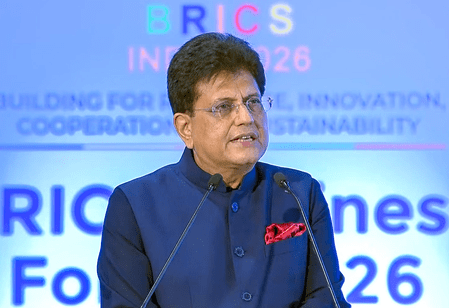
India and Canada have agreed to accelerate negotiations toward a Comprehensive Economic Partnership Agreement, with the fifth round of talks scheduled to begin on October 5 as both countries push to conclude the trade pact by the end of 2026.
Indian Commerce and Industry Minister Piyush Goyal said Monday that the coming three months could mark a significant period in relations between New Delhi and Ottawa. “The next 90 days should be a very defining period in the Canada-India relationship,” Goyal told reporters.
The announcement follows the fourth round of CEPA negotiations, which concluded on September 18. Goyal also held discussions with Canadian International Trade Minister Maninder Sidhu during Sidhu’s visit to India last week, with both sides agreeing to increase the pace of negotiations.
The fifth round is expected to begin October 5 and could continue through October 9. Canada and India are working toward completing negotiations by the end of the year as they seek to expand trade in goods, services and investment and strengthen supply chains.
The negotiations form part of a broader effort to rebuild and expand Canada-India economic relations following several years of diplomatic tensions. Both governments have set a goal of more than doubling two-way trade to $70 billion by 2030. Canada is also seeking deeper cooperation with India in areas including energy, critical minerals, artificial intelligence and nuclear supply chains.
Goyal also addressed the new U.S. Lindsey O. Graham Sanctioning Russia and Iran Act of 2026, which gives President Donald Trump authority to impose tariffs of up to 100 per cent on countries that meet the legislation’s criteria concerning purchases of Russian oil and gas.
Asked about India’s response, Goyal said New Delhi was still examining the legislation. “Details are currently coming; once we have studied them, and at an appropriate time, we will discuss with you,” he said.
The U.S. measure has created another potential trade challenge for India because of its substantial purchases of Russian crude. No country-specific tariff under the new legislation has yet been announced against India, and Goyal did not indicate what action New Delhi might take.
The accelerated Canada-India negotiations therefore come during a period of significant shifts in global trade, with Ottawa seeking to diversify its commercial relationships and New Delhi simultaneously navigating trade negotiations and tariff disputes with several major economic partners.

