













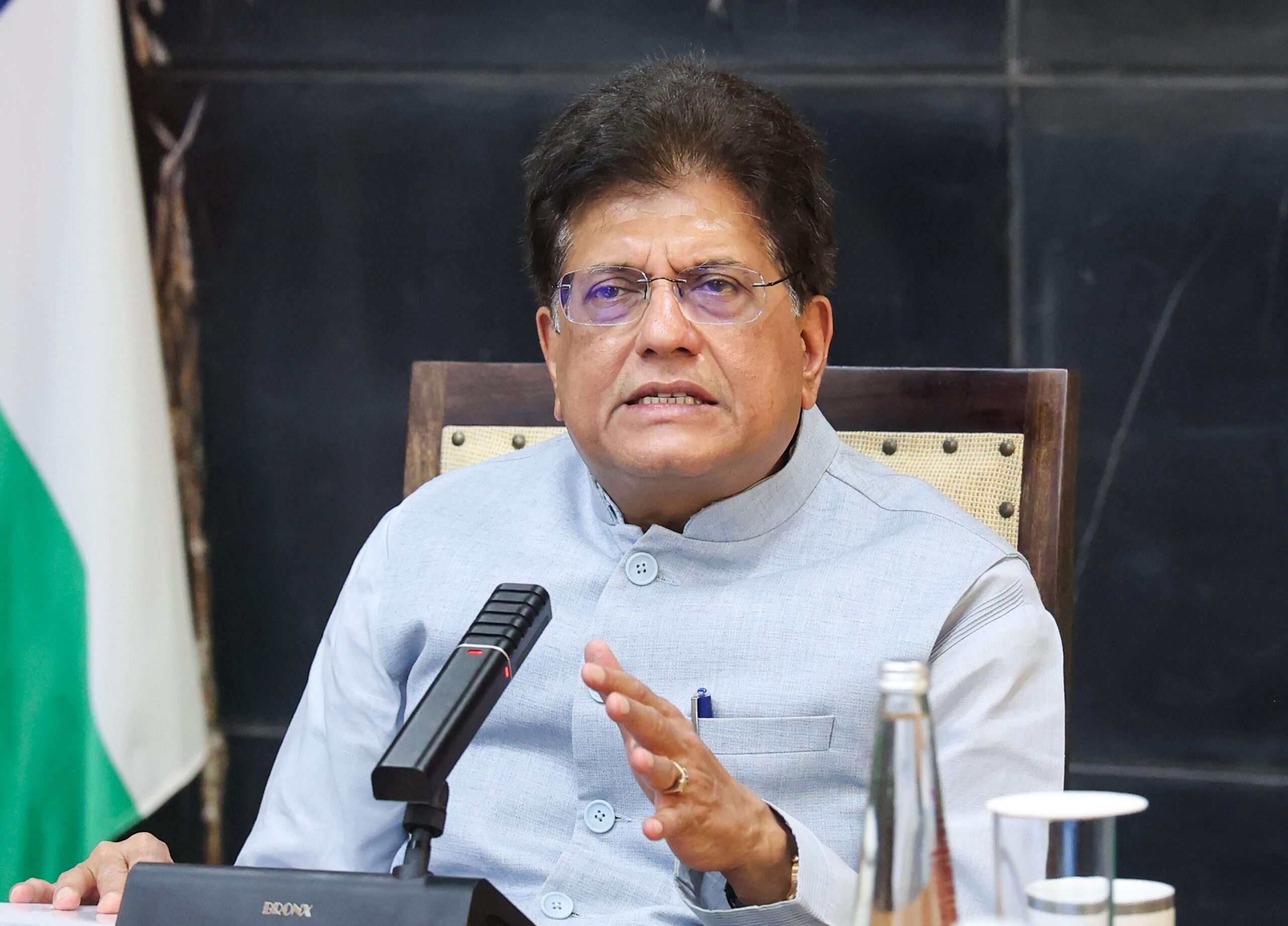
India’s Union Commerce and Industry Minister Piyush Goyal has criticized Europe’s approach to climate change, arguing that developed nations bear greater historical responsibility for global emissions and warning that restrictive trade policies could increase costs for businesses and consumers.
Speaking during a question-and-answer session at the Berlin Global Dialogue 2026 on Friday, October 23, Goyal questioned the role of industrialized economies in creating the climate crisis and challenged European countries over their environmental policies.
The minister argued that developed nations had relied heavily on inexpensive fossil fuels, particularly coal, to support their economic growth and industrial development. He maintained that these countries should acknowledge their historical contributions to global emissions before imposing additional environmental obligations on developing economies.
Goyal highlighted the disparity between India’s population and its contribution to global carbon emissions. He claimed that India accounts for approximately 17 per cent of the world’s population but contributes less than three per cent of cumulative carbon emissions, while Europe’s historical contribution has been substantially higher despite its smaller population.
He also defended India’s environmental record, emphasizing the country’s efforts to promote resource efficiency, recycling and clean energy development.
During the discussion, Goyal criticized the European Union’s Carbon Border Adjustment Mechanism (CBAM), which places carbon-related costs on certain imported products to address emissions associated with their production.
He warned that such measures, alongside high import duties on steel, could undermine industrial competitiveness, increase production expenses and ultimately raise the cost of living for European consumers.
The minister argued that European governments risk creating additional economic challenges by introducing trade restrictions intended to address environmental concerns.
When another panelist suggested that responsibility for historical emissions should also extend to the United States, Goyal clarified that his criticism was specifically directed at Europe.
Goyal further emphasized India’s commitment to expanding renewable energy, describing the country as having one of the world’s fastest-growing clean energy programmes despite its development challenges.
He also referred to the 2015 Paris Agreement, which recognizes the principle of common but differentiated responsibilities, acknowledging that countries have different historical contributions to climate change and varying capacities to address it.
According to Goyal, developed nations have failed to adequately fulfil their financial commitments to support climate action in developing countries.
He specifically criticized the longstanding pledge to mobilize $100 billion annually in climate finance, claiming that promised assistance had not materialized as expected.
The remarks came during Goyal’s official visit to Germany and the Netherlands from October 22 to 27, accompanied by a delegation of approximately 100 Indian businesses and startups.
His comments highlighted continuing disagreements between developed and developing economies over climate financing, environmental responsibilities and the impact of carbon-related trade measures on international commerce.
The debate also comes as India seeks to strengthen economic partnerships with European countries while advocating trade policies that account for differences in development levels and historical emissions.

