













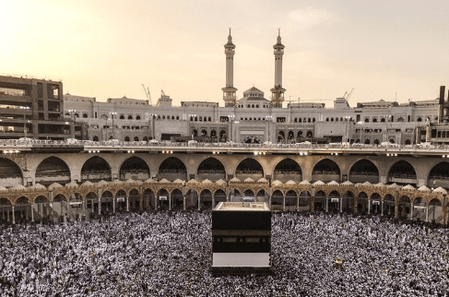
Saudi Arabia has accused Yemen’s Iran-backed Houthi rebels of attempting a drone attack targeting Mecca, declaring Islam’s holiest city a “red line” as escalating regional hostilities place growing pressure on the kingdom’s security and energy infrastructure.
Saudi authorities said their forces intercepted and destroyed the drone before it entered the airspace over Mecca, the birthplace of the Prophet Muhammad. The Houthis denied launching drones toward the city, which lies roughly 1,100 kilometres from Yemen’s border.
The alleged attack drew condemnation from several Muslim countries and the Organization of Islamic Cooperation, which represents more than 50 Muslim-majority states and said any attempt to target Mecca violated the sanctity of Islamic holy sites.
Pakistani Prime Minister Shehbaz Sharif expressed strong solidarity with Saudi Arabia, while Turkey’s foreign minister said countries could not remain indifferent to the incident. Despite those statements, officials from both Pakistan and Turkey said Riyadh had not formally requested military assistance.
The confrontation is emerging as an early test of a new defence arrangement involving Saudi Arabia, Turkey and Pakistan. A Turkish official said further work was still required to institutionalize the alliance before the agreement could become fully operational.
Saudi Arabia is simultaneously facing growing pressure on its energy infrastructure and shipping routes. A critical oil pipeline has been shut following an attack attributed to Iran-backed militias in Iraq, while the Houthis have targeted Saudi infrastructure and shipping in the Red Sea and seized several islands around the strategically important Bab el-Mandeb Strait.
Iran has also continued targeting vessels around the Strait of Hormuz, further disrupting one of the world’s most important energy corridors. Oil prices have remained above $100 a barrel amid concerns over supply and the security of regional shipping.
Saudi military spokesperson Col. Turki al-Maliki said the latest incident represented the second attempted Houthi attack directed toward Mecca, following a ballistic missile launch toward the city in 2017.
Against the backdrop of the wider conflict, Saudi Arabia is seeking to strengthen its air defences. Regional officials said Riyadh has been discussing the replenishment of its interceptor stockpiles and has approached allies including France, Britain, Pakistan and Egypt about deploying air-defence teams capable of countering missiles and drones.
Saudi officials are also seeking international support for a broader response to the Houthis, although diplomacy remains an option. Oman and Egypt are among the countries involved in efforts aimed at preventing further escalation.
The United States, a longstanding Saudi security partner and major supplier of weapons to the kingdom, has so far indicated reluctance to become directly involved in the fighting. U.S. Vice President JD Vance said Washington remained in constant contact with Saudi officials and had also held direct discussions with the Houthis.
A U.S. official said Central Command has established a task force focused on strengthening intelligence sharing and planning support with Saudi forces. CENTCOM also recently hosted senior military officials from eight countries in Germany for discussions on expanding Middle East security cooperation.
Meanwhile, the Houthis claimed Wednesday that they had shot down an F-15 fighter jet operated by the Saudi-led coalition over Yemen’s Marib province. The rebels did not provide evidence for the claim, and it could not be independently verified. Saudi authorities had not immediately confirmed the loss of an aircraft.
The escalating confrontation comes as Iran continues diplomatic outreach. Iranian Foreign Minister Abbas Araghchi met Chinese Foreign Minister Wang Yi in China, where Beijing called for restraint, the reopening of the Strait of Hormuz and measures to prevent fighting from spreading further into Yemen and the Red Sea.
Araghchi said Tehran was seeking the restoration of regional calm and peaceful relations with neighbouring countries, adding that Iran had begun discussions with governments across the region.
China, the largest purchaser of Iranian oil, has avoided direct military involvement. President Xi Jinping has offered Beijing’s assistance in efforts to end the conflict.
Shipping through the Strait of Hormuz has recovered somewhat, with estimates suggesting between five million and seven million barrels of oil are moving through the waterway each day. However, that remains less than half the volume recorded before the current conflict began with U.S. and Israeli strikes on Iran on February 28.
The attempted attack on Mecca, if Saudi Arabia’s account is confirmed, significantly raises the political and religious stakes of the confrontation. While Riyadh weighs diplomatic and military options, the kingdom is also confronting the broader challenge of protecting its holy sites, oil infrastructure and vital shipping routes as regional hostilities continue to expand.

