













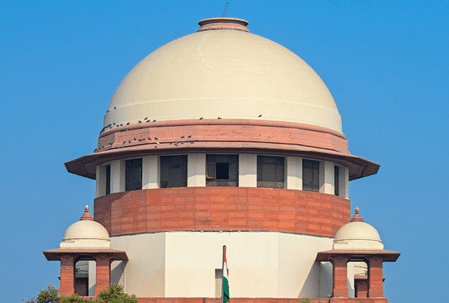
India’s Supreme Court has said it expects that people who refuse to sing Vande Mataram because of religious beliefs or conscientious objections will not face criminal consequences, as it considers a constitutional challenge brought by Carnatic musician T.M. Krishna.
A three-judge bench comprising Chief Justice Surya Kant and Justices Joymalya Bagchi and V. Mohana sought the Centre’s response to Krishna’s petition challenging a 2026 amendment to the Prevention of Insults to National Honour Act, 1971. The amendment extends statutory protection to the National Song, while Krishna has also challenged Home Ministry directions requiring all six stanzas to be sung at official functions.
During Tuesday’s hearing, Justice Bagchi said the designation and contours of the National Song are matters for the democratic state to determine, but stressed that constitutional protections for religious freedom and conscientious objection must be respected. “We expect no criminal consequences” for conscientious objectors, the bench observed, indicating that people declining to sing on religious grounds should not face penal action.
The court said it would examine whether the protection established in its landmark 1986 Bijoe Emmanuel v. State of Kerala judgment continues to apply under the amended legislation. In that case, the Supreme Court protected schoolchildren who, because of their religious beliefs, respectfully stood during the National Anthem but declined to sing it. The court held that their freedom of conscience and religion was constitutionally protected.
Krishna argues that the amended law and government directions go beyond establishing protocol and effectively compel citizens to participate in singing Vande Mataram. His petition alleges violations of constitutional protections covering equality, freedom from discrimination, freedom of speech and expression, personal liberty and freedom of conscience and religion.
Solicitor General Tushar Mehta, representing the Centre, defended the importance of Vande Mataram and its historical role in India’s independence movement. During his submissions, Mehta referred to people with a “Naxalite mindset,” prompting Krishna’s lawyer, senior advocate S. Muralidhar, to object and seek withdrawal of the expression.
The Supreme Court emphasized that it would not determine the national sentiment associated with Vande Mataram or decide how many stanzas should constitute the National Song. Instead, its examination will focus on whether the amended legal framework preserves the constitutional rights of people who object to singing it on grounds of conscience or religion.

