













The 2026 U.S. midterm elections resulted in a decisive “blue wave,” with the Democratic Party gaining control of both the Senate and the House of Representatives by flipping seven Senate seats and taking 258 House seats at the time of reporting. Out of 36 states holding gubernatorial elections, Democrats won at least 22 governorships, which includes holding 17 existing seats and flipping 5 new ones. Out of the 35 seats on the ballot, Democrats won at least 20 seats, flipping 7 previously Republican-held seats to secure a 54-seat majority. Notably, prior to the 2026 midterms, Republicans held a majority of53 seats in the U.S. Senate.
The outcome signifies a sharp withdrawal of support from U.S. President Donald Trump and the G.O.P., one marked by generational shifts from historically Republican strongholds including Texas, South Carolina and Kansas. Kansas, in particular, elected its first Democratic senator in nearly a century, suggesting a larger trend of loss of trust in Republican policy by voters on a national scale. Top House Democrat Hakeem Jeffries is now poised to become the Speaker of the House.
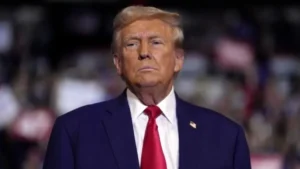
In response to the outcome, U.S. President Trump spoke to Fox News, claiming the Republicans lost because he was not on the ballot and if he had been Republicans would have won in a landslide. He added that he couldn’t transfer his support to individual Republicans and added he was more than willing to work with Democrats and said he would send any bills he didn’t support back with a veto stamp. Republican Vice President J.D. Vance identified the ongoing war with Iran and rising costs of living as primary catalysts for defeat. However, the new political landscape will significantly reshape the final two years of the Trump Presidency.
The midterms also produced several milestone firsts, with Keisha Lance Bottoms becoming Georgia’s first black female governor. Abdul El-Sayed won his race in Michigan to become the first Muslim U.S. senator. Chris Pappas won in New Hampshire, becoming the first openly gay man elected to the U.S. Senate. Gina Hinojosa made history by becoming the first Latina elected as Governor of Texas, flipping a historically red state after over thirty years.
The Democratic sweep effectively cements President Trump’s position as a lame-duck executive, as he has no possibility of re-election. This new midterm loss now means while he maintains executive veto power over bills, the G.O.P. can no longer control the progression of bills. Issues over federal spending and governance can likely lead to fractious negotiations. Democrats can now delay, block or outright reject Trump’s nominees for federal judgeships, cabinet positions, ambassadors and agency leadership roles. In addition, sweeping investigations are expected to launch, including probing allegations of conflict of interest regarding Trump’s associates and even possible impeachment proceedings for Trump or Pete Hegseth.
Democrats have previously signaled plans to target existing Republican policies, aiming to restore health insurance subsidies, challenge sweeping trade tariffs and block funding authorizations for the war against Iran. The midterm results reveal that these tariffs became a losing issue for Republicans in border states like Michigan and Maine, where voters penalized candidates linked to Trump’s trade policies. Global markets have responded quickly to the midterm results, lowering oil prices in anticipation of a rapid de-escalation of the conflict in the Middle East.
The growing opposition to Trump’s trade policies is expected to improve U.S. trade policies with Canada. Prime Minister Mark Carney noted on November 4 while in Antigua that the U.S. had already been reneging on their aggressive stance by “asking less and offering more,” suggesting a prior understanding of fallout from the midterm’s power shifts. Despite the outcome, political scientists suggest immediate relief from 50% levies is not guaranteed, as the White House holds primary authority over trade policy and tariffs, while others suggest an attempt to punish flipped states by implementing further tariffs might be in the works. Minister Le Blanc maintains that Canada will continue its attempts to diversify trade regardless of any improvement in U.S. trade partnerships. A possibility of revisiting CUSMA has not yet been mentioned.
The U.S. Free Trade Agreement has not yet been negotiated with India, though Secretary of State Marco Rubio had earlier mentioned to the media that the deal is in its final stages. In February, the two countries had outlined an interim trade agreement, with the U.S. stating it would levy an 18% tariff, decreased from 50%, and the baseline then being brought down to 10% the U.S. Supreme Court. With Trump losing control of Congress, a completed trade deal will provide Trump with an economic and diplomatic victory. Meanwhile, such a wide-scale loss offers the possibility of leverage to New Delhi, which could negotiate a balanced and more favorable deal for India. Additionally, with Democrats expected to enforce tougher sanctions on Russian oil, India’s close partnership with Russia is likely to be affected.
As several Democratic lawmakers hail from immigrant families, including five Indian Americans, the Trump administration’s strong anti-immigration rhetoric is expected to soften. Despite this, the administration’s stance on tightening visa processing, restricting professional naturalization and enforcing restricted guidelines is one above party lines and unlikely to weaken.
The midterm results suggest a shift in U.S. politics with signs of fatigue from relentless political instability, tariff pressure, and the Iran war, from voters across the political spectrum.

