













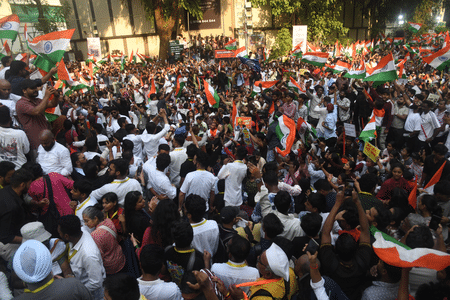
New Delhi witnessed two major protest movements this week, with more than 700 demonstrators detained during rallies demanding the resignation of India’s Chief Election Commissioner, while students and women’s rights activists continued demonstrations following the alleged gang-rape of a 17-year-old girl.
On Friday, opposition parties, student organizations and activists gathered in the national capital to protest alleged irregularities in the ongoing voter-roll revision exercise. Demonstrators demanded the resignation of Chief Election Commissioner Gyanesh Kumar, accusing election authorities of failing to ensure electoral accountability.
Police detained more than 700 protesters as authorities imposed heightened security measures across New Delhi. Section 163 of the Bharatiya Nagarik Suraksha Sanhita was enforced, while entry and exit points at 11 Metro stations were temporarily closed to restrict movement during the demonstrations.
The protests came amid growing demands from opposition groups for greater transparency in the electoral process and accountability over alleged irregularities in voter registration.
Meanwhile, a separate wave of demonstrations has continued across Delhi following the alleged gang-rape of a 17-year-old girl at Aastha Kunj Park on September 21.
According to police, three men allegedly impersonated police officers before threatening the teenager and her male friend and sexually assaulting the girl. All three suspects have since been arrested, and the teenager reportedly identified them during a test identification parade.
The incident sparked widespread outrage among students and women’s rights activists, who have demanded stronger policing, improved public safety and greater accountability in cases of sexual violence.
Students from Lady Shri Ram College, Miranda House, Gargi College and other Delhi University institutions joined demonstrations, with hundreds marching through the capital to call for safer public spaces.
The protests have also extended into residential neighbourhoods. On October 1, approximately 60 women participated in a late-night march through Vasant Kunj as part of an initiative called “Women Walk at Midnight.”
The demonstration, held shortly before midnight, drew inspiration from the women’s safety movement that emerged following the 2012 Delhi gang-rape case.
In response to the protests, the Delhi administration announced additional safety measures, including inspections of vulnerable parks, poorly illuminated streets and areas with malfunctioning CCTV cameras.
A subsequent safety audit identified deficiencies in surveillance infrastructure and lighting across several parks and green spaces.
Delhi Lieutenant Governor Taranjit Singh Sandhu has directed police to strengthen neighbourhood patrols and deploy additional female officers. He has also proposed establishing a dedicated women’s patrol unit modelled on Goa’s “pink force.”
While the two protest movements focus on separate issues, both have intensified public demands for greater accountability from authorities, with demonstrators calling for transparency in electoral administration and stronger protections for women in the national capital.

