













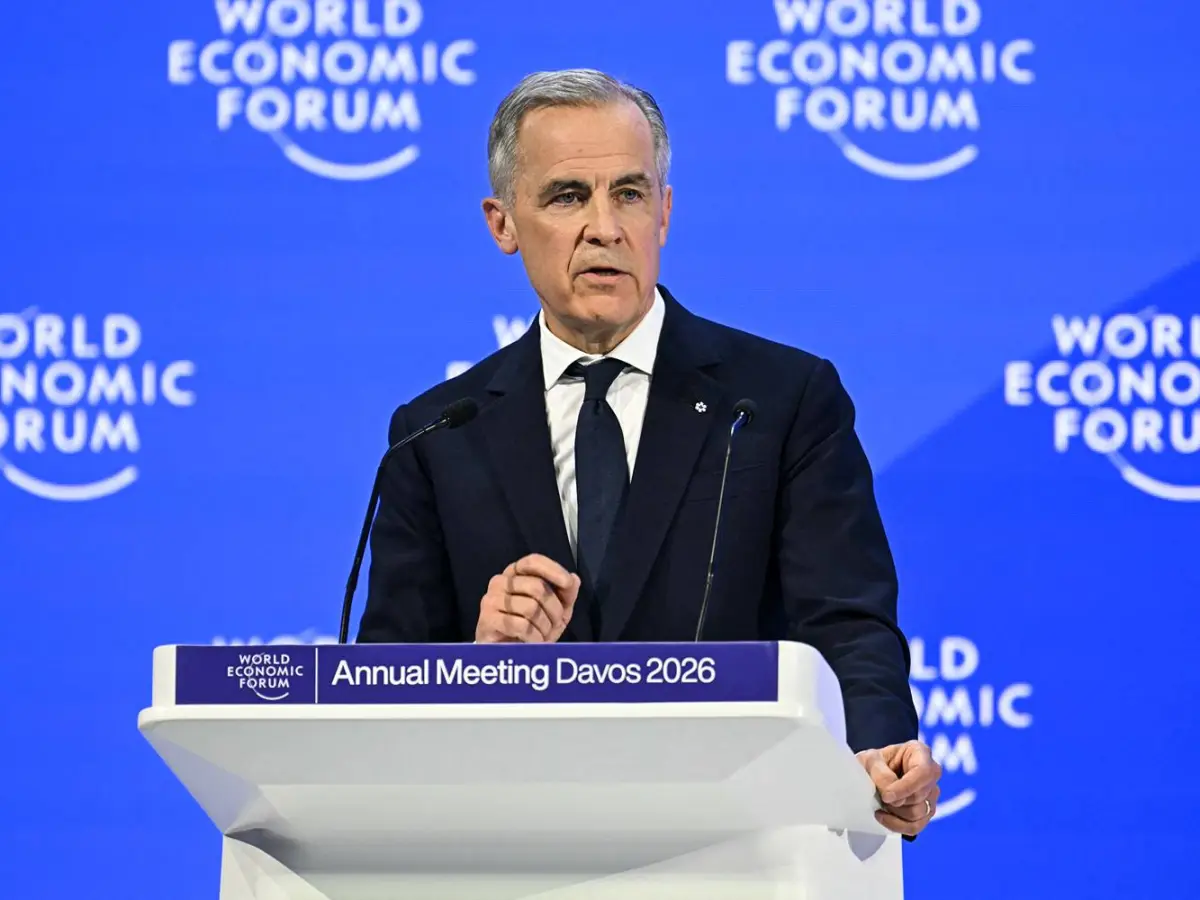
Prime Minister Mark Carney has brought veteran Liberal organizer Morgan Breitkreutz into the Prime Minister’s Office to help coordinate the federal government’s response to Alberta’s upcoming separatist referendum, scheduled for October 19.
Breitkreutz joined the PMO earlier this month as a senior special adviser after serving as chief of staff to Edmonton MP and cabinet minister Eleanor Olszewski. He is widely regarded within Liberal circles as an experienced Prairie political organizer with deep knowledge of Alberta politics.
Government sources say Breitkreutz was recruited to ensure a stronger Western Canadian perspective is represented at the highest levels of government and to help shape Ottawa’s strategy as concerns grow over Alberta’s sovereignty movement.
While Prime Minister Carney and Alberta Premier Danielle Smith remain in regular contact, the appointment signals a more intensive federal effort to engage with Albertans in the months leading up to the vote. The referendum became official after Smith confirmed in late May that Albertans would be asked whether they support remaining in Canada or beginning the legal process toward a binding separation referendum.
The federal government has increasingly expressed concern about the vote. Carney recently described separatist arguments as a “dangerous bluff,” underscoring Ottawa’s determination to defend national unity.
According to government officials, Breitkreutz will oversee key aspects of the federal response, including political organizing, policy coordination, stakeholder outreach, communications, and issues management. His role is expected to serve as a central hub for engagement with Albertans and local organizations.
In a statement, Prime Minister’s press secretary Sofia Ouslis said the position was created to provide a dedicated point person for Alberta engagement as the situation evolves.
“The Prime Minister strongly believes that the interests of Albertans and all Canadians are best served when we work together. This is a moment to unite Canadians and that is exactly what the Prime Minister will do this summer,” she said.
Liberal strategist Mike Burton praised the appointment, describing Breitkreutz as someone who understands Alberta and has spent nearly a decade helping lead successful campaigns in the province.
Breitkreutz previously served as the Liberal Party’s Prairie and Northern campaign director during the 2025 federal election and held earlier operational leadership roles within the party.
Sources also indicate that federal ministers have been encouraged to spend significant time in Alberta over the summer as Ottawa works to address concerns about alienation from the federal government. Senior Liberals are expected to have a strong presence at major events such as the Calgary Stampede, where outreach efforts will be a key focus.
Olszewski has already pledged to spend much of the summer travelling across Alberta, particularly in smaller communities, to hear directly from residents and demonstrate that Ottawa is listening to their concerns.
Current polling suggests support for Alberta separation remains a minority position. Data compiled by The Writ and polling conducted by Alberta pollster Janet Brown indicate that roughly one-quarter of Albertans support separation, while a clear majority favour remaining within Canada.
Brown cautions, however, that separatist sentiment should not be dismissed. She notes that some conservative voters are traditionally difficult for pollsters to capture, meaning actual support levels could be somewhat higher than surveys suggest.
Although she believes a majority vote for separation remains unlikely, Brown says the size of the final result will be critical. A strong rejection of separation could settle the issue for years, while a narrower outcome could prolong constitutional and political uncertainty similar to what followed Quebec’s sovereignty referendums.
She also warned against underestimating the risks of referendum politics, pointing to Britain’s Brexit vote as an example of how a closely contested referendum can produce long-term economic and political consequences.
Brown argues that persuading undecided and soft separatist voters will require more than symbolic outreach. Albertans, she says, want to see concrete progress on longstanding economic concerns.
One key test will be the memorandum of understanding signed between Ottawa and Alberta last year, which aims to support resource development, increase energy production, and expand export opportunities. Many Albertans are looking for tangible results from the agreement.
As part of that arrangement, Premier Smith is expected to present the federal government with a new pipeline proposal before the end of the month, a project that could become a significant measure of Ottawa’s commitment to Alberta’s economic priorities.
With less than four months until Albertans head to the polls, the Carney government is now moving to make national unity a central political priority, while seeking to convince Albertans that their future is strongest within Canada.

