













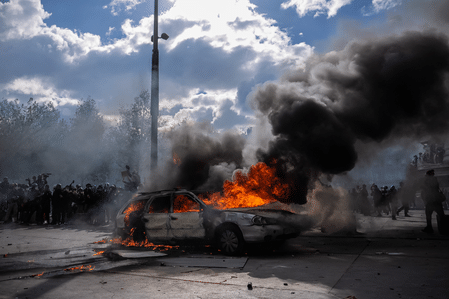
French authorities have imposed overnight curfews in parts of Paris and several other cities following a weekend of widespread unrest that saw violent clashes, looting and extensive property damage. The disturbances, described as some of France’s worst riots in years, have resulted in at least 2,400 arrests nationwide.
Paris police announced Monday that restrictions would apply to Place de la République, where violent confrontations occurred Saturday, and the Les Halles shopping district, which experienced widespread looting. The curfew will remain in effect from 11 p.m. Monday until 6 a.m. Tuesday, while public gatherings and demonstrations will be prohibited in the affected areas beginning at 8 p.m.
Authorities said the restrictions are intended to protect residents, businesses and public property from further violence. Prime Minister Sébastien Lecornu had earlier urged local officials to introduce narrowly targeted curfews in areas most affected by the unrest.
Several other French cities have also implemented restrictions. In northern France, municipalities including Lille have introduced curfews for minors under 18, running from 8 p.m. to 6 a.m. for two nights. The southern city of Nice has similarly imposed overnight restrictions on minors beginning at 9 p.m.
The unrest erupted amid nationwide demonstrations over rising living costs and deteriorating conditions in French schools. Although many protests began peacefully, violence intensified over the weekend as demonstrators clashed with riot police, set fire to public property and targeted businesses and government buildings.
On Sunday evening, groups of rioters set fire to garbage bins, bicycles and other objects while looting commercial establishments in Paris, Lyon, Marseille and other cities. The disturbances followed Saturday’s widespread confrontations, which left hundreds of police officers injured.
Lecornu defended the response of law enforcement agencies, noting that no deaths had been reported despite the scale of the destruction. He described the absence of fatalities as remarkable given the severity of the violence.
Meanwhile, French President Emmanuel Macron rejected the resignation of Interior Minister Laurent Nuñez, who offered to step down Sunday amid criticism of the government’s handling of the unrest. Macron’s office said the president considered continuity in law enforcement leadership essential during the ongoing crisis.
However, Macron directed Nuñez to ensure transparency regarding possible shortcomings in police planning and intelligence gathering that contributed to the violence. He also called for the rapid introduction of new policing strategies to prevent further disturbances and restore public order.
The latest unrest has drawn comparisons with previous periods of civil disorder in France, including the nationwide riots following the fatal police shooting of a teenager in 2023 and the yellow vest protests that began in 2018 over fuel prices and broader economic concerns.
With tensions remaining high, French authorities are stepping up security measures in major urban centres while attempting to prevent further violence without imposing sweeping restrictions on peaceful demonstrations.

