













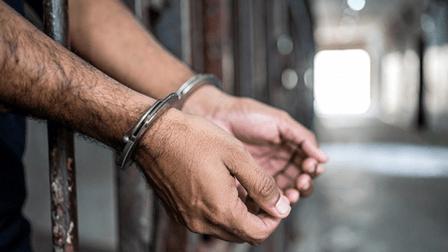
Saudi Arabia has executed two Bangladeshi nationals convicted of committing what authorities described as “indecent acts” inside a mosque in the holy city of Mecca, prompting Bangladesh to seek clarification after claiming it received no advance notification of the executions.
According to Saudi Arabia’s Interior Ministry, the man and woman were executed on Wednesday after the country’s highest court upheld their death sentences and a royal decree authorized the punishment. Officials cited the seriousness of the offence and the violation of the mosque’s sanctity but did not disclose further details about the alleged acts.
Bangladesh’s Foreign Ministry confirmed that it had formally requested additional information from Saudi authorities. Ministry official Shama Obaed said Dhaka had not been informed before the executions took place.
Saudi Arabia also executed five of its own citizens on Saturday following convictions on terrorism-related charges. The kingdom remains among the countries carrying out the highest number of executions worldwide. According to Amnesty International, Saudi Arabia executed 356 people in 2025, ranking behind only China and Iran. More than 170 executions have been carried out in the kingdom so far in 2026, according to Saudi authorities.
Meanwhile, Israeli police arrested 10 suspects on Monday following a series of violent attacks involving Israeli settlers in the occupied West Bank. The incidents, which occurred during the annual olive harvest, targeted Palestinians as well as international visitors, including American journalist Heidi Levine and European diplomats.
Levine, a photographer for The Washington Post, suffered multiple fractured ribs and vertebrae after being assaulted by a group of young settlers in the village of Abu Falah on Friday. The following day, masked settlers attacked European diplomats and others visiting the Christian village of Taybeh. Israeli police have not disclosed the identities of those arrested or their alleged involvement in the incidents.
In Yemen, at least 53 soldiers were killed and approximately 200 military recruits injured after Iran-backed Houthi rebels launched three ballistic missiles at the al-Alam military camp in the southern province of Shabwa. Provincial authorities said the recruits were undergoing training to join internal security forces. The Houthis acknowledged targeting the facility.
The deadly strike marks another escalation in Yemen’s renewed conflict between Houthi forces and the internationally recognized, Saudi-backed government. Recent hostilities have undermined the 2022 ceasefire arrangement that had significantly reduced fighting during the country’s prolonged civil war.
Diplomatic tensions have also intensified between Britain and Israel over settlement construction in the occupied West Bank. British Foreign Secretary Ed Miliband warned companies against participating in Israeli settlement projects, arguing that such activities could violate international law. He specifically criticized Israel’s E1 settlement project, describing it as a threat to prospects for a two-state solution.
Israeli Foreign Minister Gideon Saar rejected the warning, maintaining that Israel would not accept external pressure over its policies. The dispute follows measures introduced in September by Britain, France and Canada restricting trade with Israeli settlements, alongside additional British powers to sanction businesses supporting settlement activities.
Separately, Washington renewed its demand for the immediate release of former U.S. Embassy employees detained by Houthi authorities in Yemen. The U.S. State Department condemned the continued detention of Yemeni nationals who previously worked at the American diplomatic mission in Sanaa, which closed in 2015. Houthi forces seized the former embassy headquarters in October 2021 and detained dozens of former employees, although several were subsequently released.
Regional tensions have also increased following fresh warnings from Iran. Mohammad Mokhber, an adviser to Supreme Leader Mojtaba Khamenei, declared that Tehran would retaliate against any renewed American strikes on Iranian military bases or petrochemical facilities. He warned that Iran could target military installations across nine countries in response, without identifying which nations might be affected.
Mojtaba Khamenei assumed Iran’s supreme leadership following the death of his father, Ayatollah Ali Khamenei, who was killed by Israel at the beginning of the war. The younger Khamenei has not made a public appearance or statement since taking office.
The developments underscore mounting instability across the Middle East, with renewed military confrontations, human rights concerns and diplomatic disputes placing additional pressure on regional security.

