













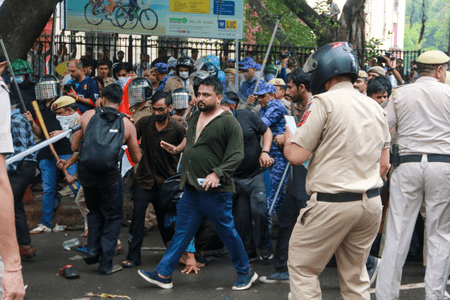
India’s Supreme Court invoked special constitutional powers on Tuesday to drop criminal charges against the majority of demonstrators involved in widespread July protests over a leaked medical exam paper. The demonstrations, led by the online movement Cockroach Janta Party (CJP), had spiraled into violent clashes with police in New Delhi, Bihar, and West Bengal, leading to the resignation of the education minister and the indictment of hundreds of students on charges of rioting and property damage.
Delivering the ruling, Chief Justice Surya Kant emphasized the need for mutual good faith to resolve lingering issues, while ordering the government to compensate the families of students who tragically died by suicide following the exam leak. In response to the high court’s relief order, CJP spokesperson Ashutosh Ranka announced that the group is canceling its upcoming protest scheduled in Delhi for Saturday.
However, the legal reprieve does not extend to everyone involved in the unrest. According to the Press Trust of India, criminal investigations will move forward for 2,873 protesters who possess prior criminal records.
What began as localized anger over academic corruption quickly evolved into a broad-based movement addressing youth unemployment and rising opposition to Prime Minister Narendra Modi’s administration. The mass demonstrations represent one of the most severe political challenges Modi has encountered since securing his third term in office in 2024.

