













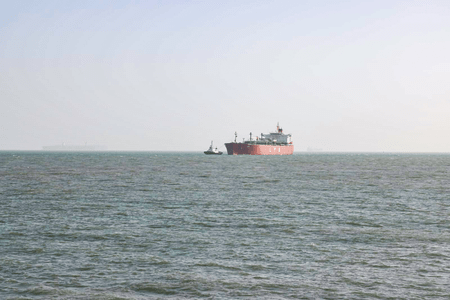
Global oil prices surged Monday as renewed fighting between the United States and Iran intensified concerns over shipping through the Strait of Hormuz, one of the world’s most critical energy corridors.
Brent crude, the international oil benchmark, climbed more than four per cent, with September futures reaching $78.82 a barrel — their highest level since June 22.
The increase followed a fresh exchange of attacks between Washington and Tehran. U.S. Central Command said it carried out dozens of strikes against Iran aimed at reducing its ability to target vessels in the strait. The strikes followed an alleged Iranian attack on the Cyprus-flagged container ship MV GFS Galaxy.
Iran responded with missile and drone attacks targeting several Gulf countries, including the United Arab Emirates, Qatar, Kuwait, Oman and Bahrain.
The renewed hostilities have sharply reduced maritime traffic through the Strait of Hormuz. According to maritime intelligence platform Windward, only six vessels were tracked crossing the waterway during one 12-hour period last week, compared with 18 to 22 daily crossings earlier in July. Before the war, roughly 130 vessels transited the strait each day.
The Strait of Hormuz normally carries about one-fifth of the world’s oil trade, making disruptions to shipping a major concern for global energy markets.
Oil prices had previously fallen back toward pre-conflict levels following a June 17 memorandum between Washington and Tehran, but Brent is now about nine per cent higher than before the initial U.S. and Israeli strikes on Iran in late February.
Analysts expect geopolitical uncertainty to keep oil prices elevated, although some believe weaker demand and additional global supply could limit the scale of further increases.
Major Asian stock markets also fell Monday as investors reacted to the renewed escalation in the Middle East.

