












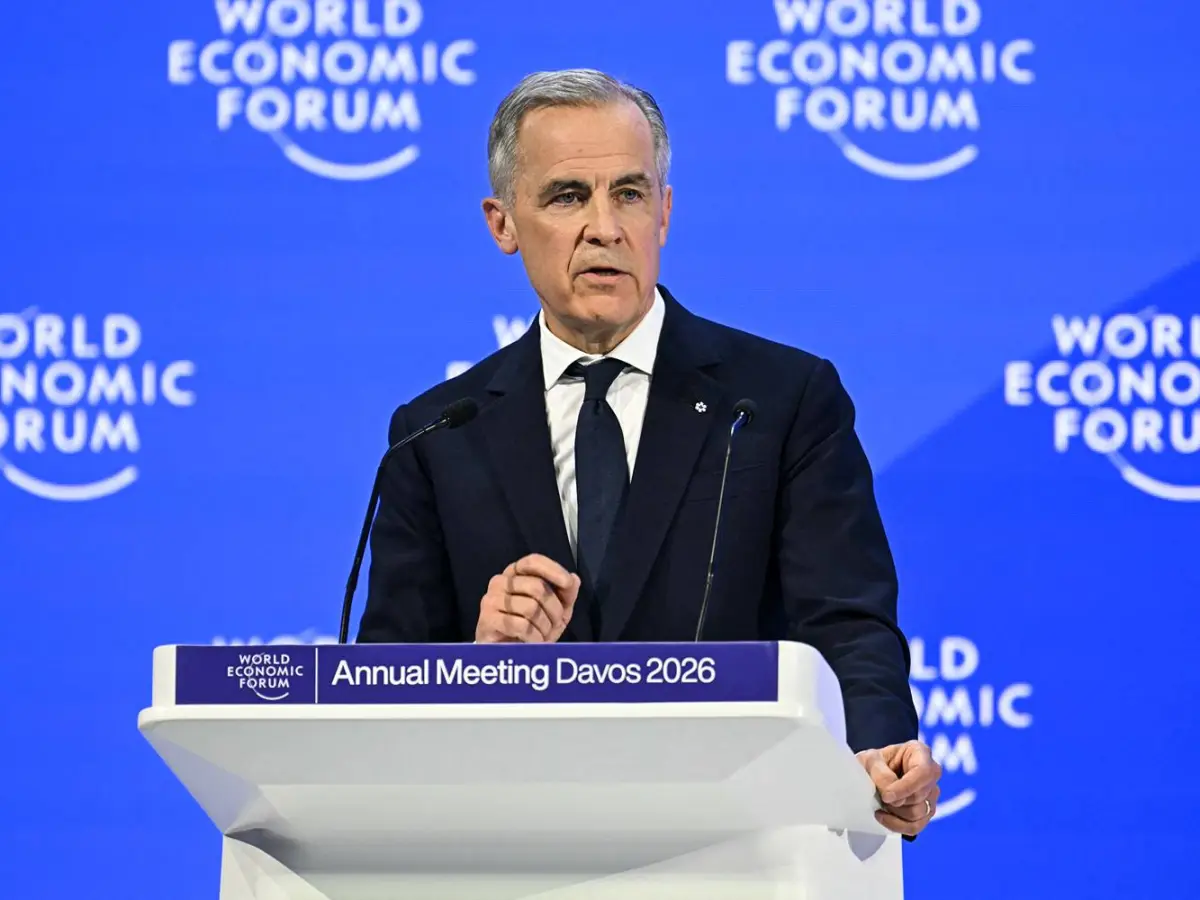
Prime Minister Mark Carney invoked the shared history of Canada and Europe — and a century-old story of oak trees carried between France and Canada — as he called for a deeper transatlantic alliance aimed at protecting democracy, sovereignty and the rule of law in an increasingly divided world.
Addressing the European Parliament in Strasbourg, France, on Thursday, Carney argued that the relationship between Canada and Europe runs much deeper than trade agreements or political treaties. He began his address with the story of Goethe’s oak at Ettersberg in Germany, which became a symbol of European culture before finding itself within the grounds of the Buchenwald concentration camp during one of Europe’s darkest periods. Carney used the story to make a broader point: democratic values and freedoms cannot simply be inherited but must continually be defended.
He then connected that European history directly to Canada through the Battle of Vimy Ridge, often described as a defining moment in Canada’s development as a nation. In 1917, Canadian Lieutenant Leslie Miller collected acorns from oak trees amid the devastated landscape around Vimy and brought them home to Milliken, Ontario. He planted the acorns on Canadian soil, where they eventually grew into a forest. About a century later, grafts from those Canadian-grown Vimy oaks were taken back to France and replanted near the battlefield from which the original acorns had come.
For Carney, the journey of those trees across the Atlantic and back again represented the foundation of the Canada-Europe relationship — one built through the exchange of people, values, ideas, commerce and progress over generations. He said Canada and Europe are not “fair-weather allies,” but partners whose commitments to human dignity, individual freedom, democracy and the rule of law share deep historical roots.
Carney extended the tree metaphor to the geopolitical challenges confronting both Canada and Europe today. Climate change, weakening democratic norms, economic coercion, vulnerable supply chains and the weaponization of tariffs have created what he described as a powerful storm. He also warned about technology platforms seeking greater control over data and regulation and spreading misinformation. His message was that individual countries are more vulnerable when confronting these pressures alone.
“A single tree will come down in it. A forest will not,” Carney said. He pointed to the way the roots of neighbouring oak trees intertwine and strengthen one another beneath a forest floor, presenting that natural system as a model for closer cooperation between Canada and Europe. Together, he argued, Canada and the EU could strengthen their ability to withstand external pressure while protecting the values on which their societies are built.
The address came one day after European Commission President Ursula von der Leyen proposed opening the door to Canada becoming the European Union’s first “associate member,” a status that does not currently formally exist under EU treaties. Carney did not embrace that specific label in his address, but welcomed the ambition behind the proposal. He argued that Canada and Europe could deepen cooperation in areas including defence, artificial intelligence, energy, critical minerals, digital trade and financial services. The Canadian government says the EU’s manufacturing and research capacity complements Canada’s strengths in energy, critical minerals, AI, quantum technologies, space and banking.

