












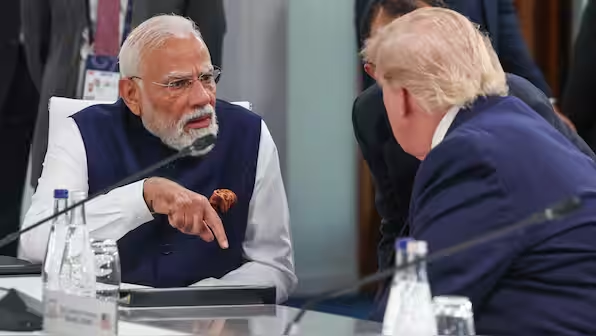
The noticeable lack of warmth between Prime Minister Narendra Modi and U.S. President Donald Trump at the G7 Summit in France is sparking fresh speculation about growing strains in India-U.S. relations.
Meeting face-to-face for the first time in 16 months, the two leaders exchanged a formal handshake rather than the trademark hug that had previously come to symbolize their personal rapport. Trump was seen patting Modi on the arm, but there was little visible warmth during the interaction. Earlier, during the leaders’ family photo session, there appeared to be no notable exchange of greetings or eye contact between the two.
Despite the subdued optics, hopes remain for a reset in bilateral ties as Modi and Trump are scheduled to hold their first formal bilateral meeting since February 2025.
Relations between New Delhi and Washington have faced increasing turbulence in recent months. While Modi was among the first world leaders to meet Trump following his election victory, ties have since been tested by U.S. tariffs on Indian goods, Washington’s renewed engagement with Pakistan, and immigration policies that have affected Indian students and workers in the United States.
Negotiations on a long-awaited trade agreement have also failed to reach a conclusion. More recently, the deaths of three Indian sailors in the Gulf of Oman during U.S. military strikes added another layer of tension to the relationship, despite signs of stabilization following the May visit of U.S. Secretary of State Marco Rubio.
Against this backdrop, Modi used his address to G7 leaders to deliver a message that many observers viewed as directed at Washington.
“The world is not suffering from a deficit of resources; it is suffering from a deficit of trust,” Modi said, emphasizing that the future of global partnerships depends on rebuilding confidence and credibility among nations.
Without directly naming any country, the Prime Minister also highlighted the human cost of conflict and stressed the importance of safeguarding maritime trade routes and protecting seafarers. The remarks came just days after Indian sailors lost their lives in the Gulf region amid escalating tensions involving the United States and Iran.
Further concerns in New Delhi have emerged following a recent U.S. decision to reportedly drop “Indo” from the title of its largest military command. The accompanying map used in the announcement also appeared to depict Pakistan-occupied Kashmir as part of Pakistan, drawing attention in India.
The development is particularly notable because it was during Trump’s first term that the command was renamed the U.S. Indo-Pacific Command, a move widely viewed at the time as recognition of India’s growing strategic importance in the region.
With both leaders expected to meet on the sidelines of the summit, attention will now turn to whether Modi and Trump can ease tensions and restore momentum to one of the world’s most consequential strategic partnerships.

