













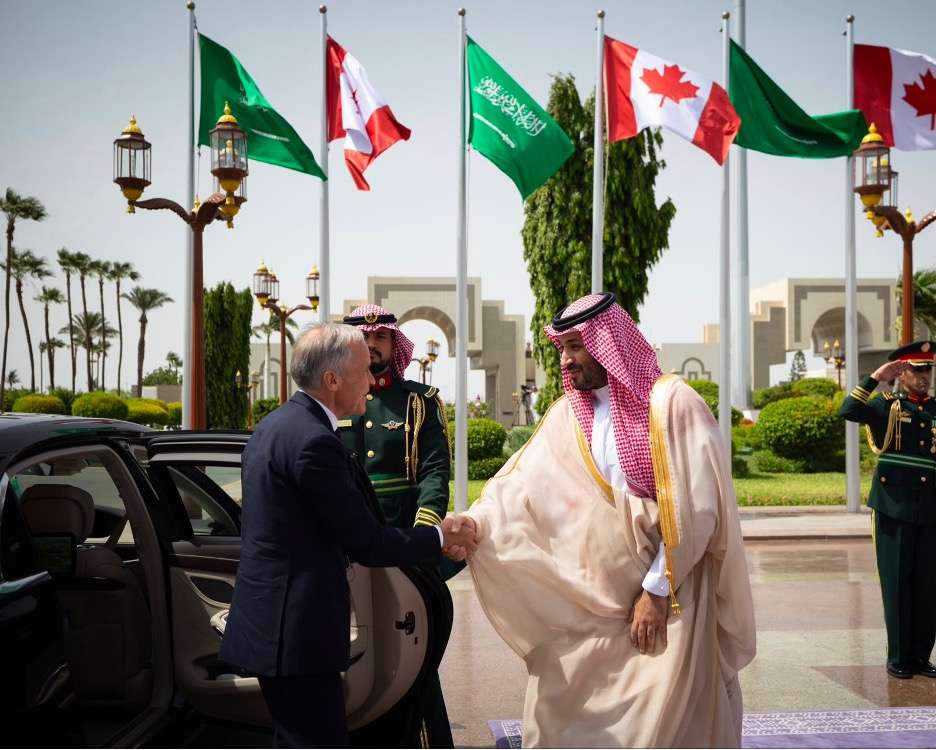
Former Liberal foreign affairs minister Lloyd Axworthy is criticizing Prime Minister Mark Carney’s increasingly centralized and transactional approach to global affairs, arguing that it has reduced consultation and weakened the traditional role of Canada’s foreign ministry.
Axworthy, who served as foreign affairs minister under former prime minister Jean Chrétien from 1996 to 2000, said Canadian foreign policy is now largely driven by Carney and the Prime Minister’s Office, with key decisions increasingly concentrated within the PMO and Privy Council Office rather than Global Affairs Canada.
He argued the government has done little to consult foreign policy experts, non-governmental organizations, practitioners or even members of the Liberal caucus before setting its international priorities.
Axworthy also questioned the amount of independence given to Foreign Affairs Minister Anita Anand, contrasting the current structure with his own time in cabinet, when he said foreign ministers had greater discretion over Canada’s international agenda.
Carney has emerged as the primary face of Canada’s new foreign policy strategy, taking a prominent role in discussions with international leaders and focusing heavily on trade diversification, investment and economic partnerships.
However, Axworthy said the government’s international agenda has become too narrow and increasingly shaped by Carney’s economic priorities. He also raised concerns about billions of dollars in planned cuts facing Global Affairs Canada, arguing Canada cannot strengthen its international credibility while reducing diplomatic and foreign assistance resources.
Axworthy described Carney’s foreign policy as a major shift from the Liberal Party’s traditional international approach and said he now has “buyer’s remorse” over the direction of the government.
“We didn’t vote for this kind of transactional foreign policy,” he said.
The criticism follows Carney’s recent trip to Saudi Arabia, where the prime minister sought to expand Canadian trade ties despite previous tensions between Ottawa and Riyadh over human rights. During the visit, Carney said “lecturing countries from afar is an ineffective strategy.”
Axworthy argued the government has been reluctant to take strong positions on human rights concerns involving strategic partners, as Ottawa prioritizes economic interests and efforts to reduce Canada’s dependence on the United States.
He said international pressure on institutions such as the International Criminal Court could become a major test of Carney’s foreign policy approach.
Former officials defend Carney’s global strategy
Other former Canadian officials, however, rejected the suggestion that Carney’s foreign policy represents a radical departure from Liberal traditions.
Former international trade minister Sergio Marchi said Canada’s approach must adapt to a rapidly changing geopolitical environment and argued Ottawa cannot afford to isolate major countries such as China, India or Saudi Arabia.
“If we isolate those countries, those countries will pick other partners,” Marchi said.
Marchi described Carney’s strategy as practical and suited to current global challenges. He argued publicly criticizing foreign governments does not necessarily advance Canada’s human rights objectives and can instead damage diplomatic relationships.
He also welcomed Carney’s prominent role on the world stage, saying the prime minister’s direct engagement with international leaders could significantly expand Canada’s global influence.
Former Canadian diplomat Roy Norton similarly said Carney’s international experience and extensive network of contacts give Canada a unique diplomatic advantage.
Norton said Carney is “instantly taken seriously” by global leaders and has the ability to open doors that may previously have been difficult for Canadian officials to access.
He rejected suggestions that Carney’s prominent international role undermines Global Affairs Canada, arguing the prime minister’s contacts, experience and diplomatic activity ultimately help advance Canada’s interests and create additional work for the foreign ministry.
Norton acknowledged Carney’s central role could overshadow the foreign affairs minister but said Anand has not positioned herself as a rival to the prime minister on international affairs.
The debate highlights a broader divide over Canada’s evolving foreign policy as the Carney government prioritizes economic diplomacy and new global partnerships while navigating trade tensions with the United States and growing geopolitical instability.

