













Canada, the United Kingdom and France are moving to restrict trade in goods produced in Israeli settlements in the occupied West Bank, joining a broader initiative involving 12 countries seeking concrete action against continued settlement expansion.
The governments say accelerating settlement construction, increasing settler violence and plans for further development in the E1 area east of Jerusalem threaten the prospects of establishing a viable Palestinian state and reaching a negotiated two-state solution.
The initiative represents a significant shift from diplomatic criticism toward economic measures, with Canada, Britain and France — all G7 members — committing to national restrictions on settlement goods.
12 countries back coordinated action
The joint initiative involves Canada, Denmark, Finland, France, Iceland, Ireland, Norway, Poland, Portugal, Spain, Sweden and the United Kingdom.
The countries are not necessarily adopting identical restrictions. Under the joint approach, governments may introduce their own national measures, support restrictions at the European level or consider further action through their respective domestic processes.
Canada, France and Britain, however, have specifically indicated they intend to introduce national measures prohibiting trade in goods originating from Israeli settlements.
The restrictions are directed at settlements rather than constituting a broader trade embargo against Israel.
Approximately 700,000 Israeli settlers live in the West Bank and East Jerusalem. Most of the international community considers Israeli settlements in the occupied territories illegal under international law, a position Israel disputes.
UK measures could extend beyond physical goods
Britain is also proposing restrictions that could extend beyond merchandise.
The UK plans to target certain services connected with settlement activity, potentially affecting sectors including construction, finance, infrastructure, real estate and advertising.
The broader approach could increase economic pressure on businesses and individuals involved in supporting or profiting from settlement activity.
E1 development draws particular concern
The 12 governments have highlighted proposed Israeli development in the E1 area east of Jerusalem as a particular concern.
The area is considered strategically important because extensive settlement construction there could further separate Palestinian population centres in the West Bank and complicate territorial continuity between East Jerusalem and other parts of a future Palestinian state.
The participating governments argue that continued settlement expansion, annexation-related measures and forcible displacement threaten the viability of a two-state solution.
Israel responds with measures against Britain
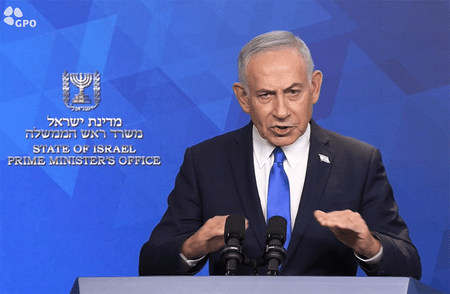
Israel has reacted particularly strongly to Britain’s announcement.
Israeli Foreign Minister Gideon Saar announced plans to close the British Consulate in East Jerusalem, which has traditionally played an important role in Britain’s relations with Palestinians.
Israel also says Britain will be removed from a U.S.-led Gaza co-ordination mission and will no longer participate in training Palestinian Authority security forces in the West Bank.
Saar has accused Britain of interfering in Israel’s domestic politics ahead of the country’s upcoming election.
U.S. response adds another diplomatic dimension
The dispute could also affect relations between the participating governments and Washington.
U.S. Ambassador to Israel Mike Huckabee has warned that Britain could face consequences over its settlement policy, including potential implications arising from U.S. state laws targeting boycotts of Israel.
That raises the possibility of a broader diplomatic and economic confrontation involving Israel and several European governments, along with Canada, while the United States considers how to respond to the settlement restrictions.
Palestinian Authority welcomes measures
The Palestinian Authority has welcomed the initiative, describing the restrictions as an important practical step toward holding the Israeli settlement system accountable.
The measures also signal growing frustration among several Western governments over settlement expansion and the deteriorating situation in the occupied West Bank.
While the direct economic value of settlement goods entering these countries may be relatively limited, the political implications could be considerably greater.
Canada, France and Britain are moving beyond statements opposing settlement expansion toward tangible economic restrictions. Attention will now turn to whether additional European governments introduce outright bans, how broadly the measures are enforced and whether Israel or the United States responds with further economic or diplomatic action.

