













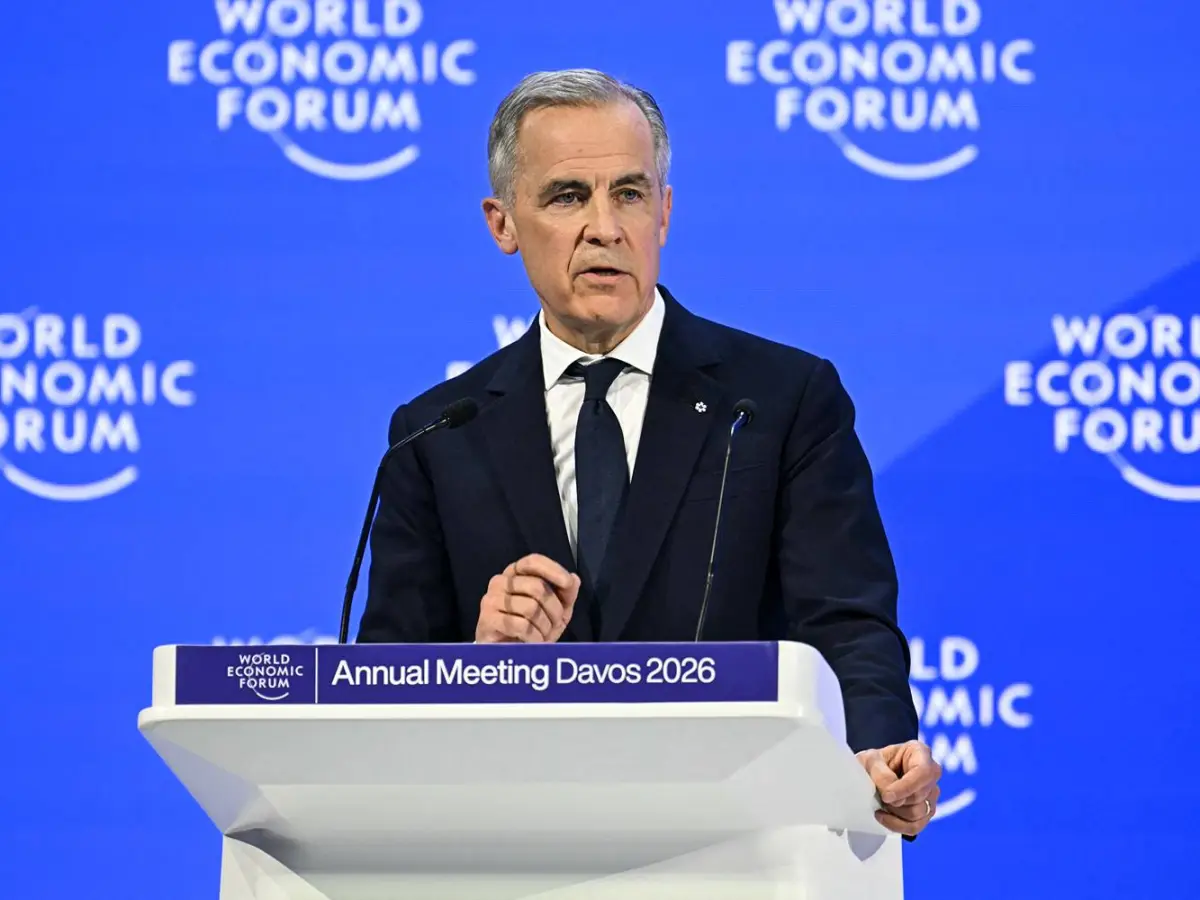
Prime Minister Mark Carney has acknowledged that Canada’s greenhouse gas emissions are expected to be higher in the coming years than they would have been under the previous Liberal government’s climate plan, arguing that the former strategy was economically and politically unsustainable.
Speaking in his second “Forward Guidance” video address released Tuesday, Carney said the emissions framework inherited from the previous government would have imposed excessive costs on Canadians already grappling with affordability challenges and could have deepened regional divisions.
“The old plan was not sustainable over the long term,” Carney said, adding that it created “an open opportunity for those people who wish to pull Canada apart, both at home and from abroad.”
Although he did not mention former prime minister Justin Trudeau by name, Carney contrasted his government’s approach with the previous Liberal climate strategy, which committed Canada to reducing greenhouse gas emissions by 30 per cent below 2005 levels by 2030 before later increasing that target to between 40 and 45 per cent.
Carney described the previous plan as well-intentioned but no longer suited to today’s geopolitical and economic realities, saying the conditions that existed when it was developed in 2015 have fundamentally changed.
Drawing on his own experience growing up in Edmonton, Carney also reflected on former prime minister Pierre Elliott Trudeau’s National Energy Program, saying it left many western Canadians feeling alienated and contributed to decades of regional tensions.
“What should have brought us together began to divide us,” he said, arguing that Canada’s future energy strategy must instead strengthen national unity.
While reaffirming his government’s commitment to reducing emissions over time, Carney stopped short of announcing new emissions targets. Instead, he emphasized expanding Canada’s energy production alongside investments in cleaner technologies.
He noted that Canada is producing more oil than at any point in its history, with only the United States and Russia increasing production more over the same period.
The remarks mark another significant shift from Trudeau-era climate policies. Since becoming prime minister, Carney has eliminated the federal consumer carbon tax and paused federal electric vehicle sales mandates, choosing instead to focus on financial incentives for clean technology adoption.
Carney also argued that responsibly produced conventional energy should continue to play an important role in Canada’s economy. He highlighted expanded access to Asian markets through the Trans Mountain pipeline and promoted plans for a second pipeline from Alberta under the energy memorandum of understanding signed between Ottawa and Alberta in late 2025.
His comments come as Alberta prepares for an Oct. 19 referendum that will include a question asking voters whether they support holding a future binding referendum on provincial separation from Canada.
Environmental groups criticized Carney’s suggestion that previous climate policies had become divisive.
Lisa Gue, national policy manager with the David Suzuki Foundation, questioned the government’s emphasis on pipeline expansion, arguing that Canadians share common interests in building a resilient economy while protecting the environment.
Carney also pointed to growing international support for Canada’s energy ambitions. During the G7 Leaders’ Summit in France earlier this month, member nations endorsed diversifying global energy supply routes, including increasing Canada’s capacity to supply international markets amid concerns over disruptions in the Strait of Hormuz.
Looking ahead, the prime minister highlighted his government’s national electricity strategy, which aims to double Canada’s electricity grid by 2050 through major investments in clean, reliable and affordable power infrastructure.
Referencing Ontario hydroelectric pioneer Sir Adam Beck, Carney said Canada must once again undertake nation-building energy projects capable of supporting long-term economic growth.
Conservatives, however, say the government must move beyond announcements.
Conservative energy and natural resources critic Carol Anstey said while the government’s vision sounds promising, Canadians are still waiting to see major resource projects advance.
She called on Ottawa to remove legislation she says discourages development and to accelerate approvals so construction can begin.
Meanwhile, Alberta Premier Danielle Smith is expected to outline the province’s next steps on a proposed new west coast oil pipeline after Alberta submitted its proposal to the federal Major Projects Office.
Speaking to reporters in Kuujjuaq, Quebec, Carney said he has reviewed the proposal but noted that no private-sector proponent has yet formally stepped forward to develop the project.

