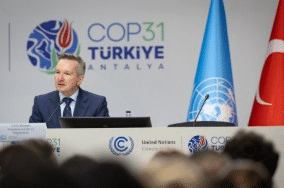












The COP31 United Nations climate summit in Antalya, Turkey, ended without an overarching agreement on Sunday, November 22, 2026, after negotiations broke down over fossil fuel commitments and climate financing. The conference, which extended two days beyond its scheduled conclusion, reportedly became the longest UN climate summit on record. COP31 President Murat Kurum announced during the closing plenary that negotiations had ended and no further draft agreements would be produced, marking a major setback for international efforts to address global warming.
The central dispute concerned the removal of references to fossil fuels from the proposed final agreement. Earlier drafts had included language supporting a transition away from coal, oil and natural gas, building on the commitment adopted at COP28 in Dubai in 2023. However, opposition from major oil-producing countries, including Saudi Arabia, reportedly led negotiators to remove those provisions from the final draft. The omission prompted objections from countries seeking stronger commitments to reduce dependence on fossil fuels, which remain the largest source of global greenhouse gas emissions.
The European Union, United Kingdom and several climate-vulnerable nations, including Panama and the Marshall Islands, refused to endorse the proposed agreement. Irish Climate Minister Darragh O’Brien, speaking on behalf of the European Union, criticized the exclusion of fossil fuel language, arguing that an international climate agreement could not meaningfully address global warming without acknowledging its primary cause. The disagreement exposed continuing divisions between fossil fuel-producing economies and countries demanding faster emissions reductions.
Negotiations also stalled over climate financing, with developing nations seeking stronger financial commitments from wealthier countries to support emissions reductions, climate adaptation and recovery from extreme weather events. Many lower-income countries argued that existing financial assistance remains insufficient to address rising temperatures, severe flooding, droughts and other climate-related disasters. Australia’s Climate Change Minister Chris Bowen, serving as COP31 President of Negotiations, acknowledged that competing national priorities had created major obstacles to reaching consensus. The absence of an official United States delegation further complicated the diplomatic environment.
The breakdown represents one of the most significant setbacks in international climate negotiations since the 2009 Copenhagen summit, where governments also struggled to reach a comprehensive agreement. UN Secretary-General António Guterres expressed disappointment over the outcome and criticized the influence of powerful fossil fuel interests, while UN climate chief Simon Stiell acknowledged weaknesses in the consensus-based negotiating process. With no overarching agreement adopted, unresolved questions surrounding fossil fuel reductions, financial assistance and implementation of the Paris Agreement will remain central challenges for future climate negotiations.
COP31 Climate Talks In Turkey Collapse Without Deal As Summit President Says No New Draft