













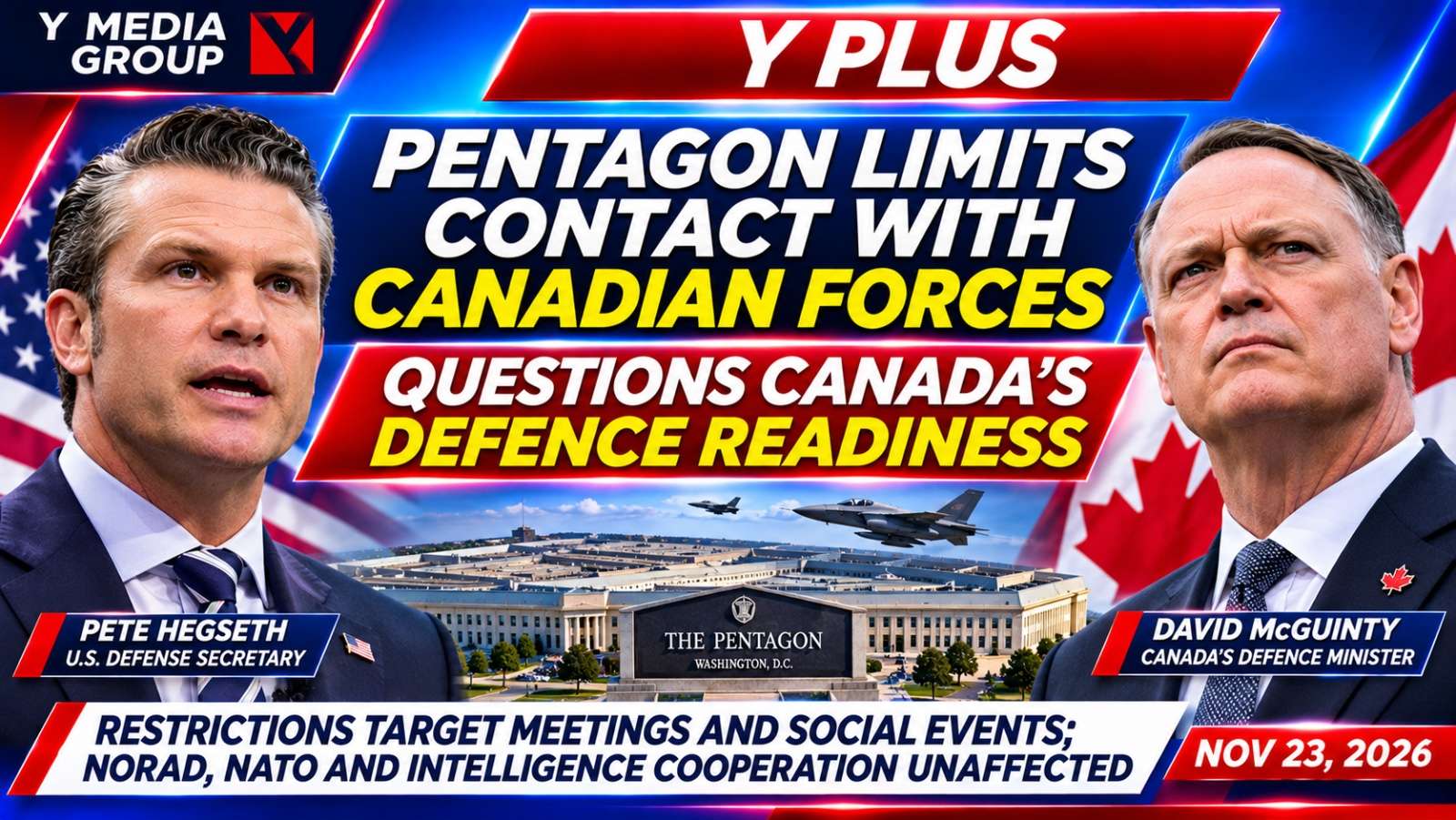
U.S. Defence Secretary Pete Hegseth has reportedly issued a classified directive limiting certain interactions between American and Canadian military personnel, marking another point of tension in the two countries’ longstanding defence relationship. The directive is accompanied by a Pentagon document reportedly questioning Canada’s reliability as a military partner, although officials on both sides of the border maintain that essential defence cooperation remains unaffected.
According to media reports, the restrictions primarily target informal and social interactions between military personnel, while participation in certain think tank events and public engagements will require additional authorization. Republican Senator Mike Rounds clarified that the measures do not amount to a suspension of military cooperation but instead introduce tighter controls over non-operational exchanges.
The reported directive comes amid growing disagreements between Washington and Ottawa over defence spending, military preparedness and procurement priorities. An accompanying Pentagon fact sheet reportedly raises concerns about Canada’s credibility and readiness as a defence partner. Relations have also been strained by trade disputes, U.S. tariffs and Prime Minister Mark Carney’s efforts to diversify Canada’s economic and security partnerships, reducing its dependence on the United States.
Despite the restrictions, Pentagon spokesperson Sean Parnell emphasized that the directive does not affect intelligence sharing or joint operations under the North American Aerospace Defense Command (NORAD) and NATO. Rounds similarly confirmed that cooperation through the Five Eyes intelligence alliance remains intact, preserving critical security arrangements between the two countries.
Canadian Defence Minister David McGuinty, speaking at the Halifax International Security Forum, said he had not personally reviewed the classified memorandum and had observed no changes to ongoing military operations. He described bilateral defence cooperation as business as usual, citing continued collaboration through NORAD and joint counternarcotics operations in the Caribbean.
The development nevertheless highlights mounting diplomatic friction between the two NATO allies as Canada seeks greater strategic independence while maintaining its deeply integrated military relationship with the United States. Although operational cooperation remains unchanged, the reported restrictions signal a potential shift in Washington’s approach to its closest defence partners.

