













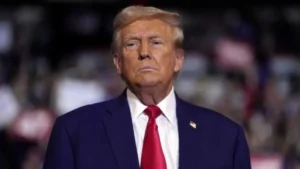
U.S. President Donald Trump has announced a new economic pressure campaign against Iran, warning that countries continuing to provide financial or commercial support to Tehran could face significant consequences from Washington.
In a Truth Social post on Wednesday, Trump said Iran had failed to take advantage of opportunities to reach an agreement with the United States and would now face what he described as unprecedented economic warfare and isolation.
Trump warned that countries allowing their banks, businesses, airports or government entities to assist Iran could themselves face major economic penalties. He specifically pointed to oil smuggling, cash transfers, swap arrangements, exchange houses, ship registries and front companies used to help Tehran circumvent international restrictions.
The announcement builds on the Trump administration’s existing Operation Economic Fury, launched after the U.S.-Israel war with Iran began in February. Washington has already imposed extensive sanctions targeting Iran’s oil, shipping and financial sectors, while also targeting companies, brokers and tankers accused of facilitating Iranian energy exports.
Iran Rejects Latest Threats
Iranian Foreign Minister Abbas Araghchi dismissed Trump’s announcement, accusing Washington of using economic pressure as a distraction from its own domestic financial problems.
Araghchi described the measures as “economic terrorism” and argued that further sanctions would hurt the global economy while increasing hostility toward the United States among Iranians.
Iranian state media also played down Trump’s announcement. State broadcaster IRIB said the move followed what it called the failure of U.S. military action, while the semi-official Tasnim news agency argued that Washington has been attempting for years to block Iran’s international financial and economic relationships.
Iranian outlets maintained that Tehran has developed experience in circumventing sanctions and keeping some international trade channels operating.
UAE Cuts Financial Ties With Iran
Trump’s announcement came shortly after the United Arab Emirates suspended financial ties with Iran, accusing Tehran of launching two ballistic missiles toward Emirati waters.
Iran denied the allegation and described it as a “false-flag operation.”
The UAE has historically been one of Iran’s most important commercial and financial partners, making the suspension potentially significant for Tehran’s ability to conduct international trade and access financial networks.
Brandeis University Middle East economics professor Nader Habibi said he believed Washington had strongly encouraged the UAE to impose the restrictions, pointing to recent communications between senior U.S. and Emirati officials.
China Could Be the Biggest Test
The effectiveness of Trump’s latest campaign could ultimately depend on how major Iranian trading partners respond, particularly China, Iraq and Türkiye.
China remains a crucial buyer of Iranian oil and has previously resisted American efforts to restrict its commercial relationships with Tehran. Iraq also relies on significant energy and trade links with Iran, while Türkiye has historically opposed joining unilateral U.S. sanctions.
Washington can increase pressure through so-called secondary sanctions, which can restrict foreign companies and financial institutions from accessing the U.S. market or financial system if they continue prohibited transactions with Iran.
However, analysts have questioned how much additional economic pressure Washington can realistically impose after years of extensive sanctions.
Trump’s announcement therefore represents an escalation of the existing pressure campaign, but its impact will depend heavily on whether major Iranian trading partners comply with U.S. demands or continue finding ways to maintain economic ties with Tehran.

