













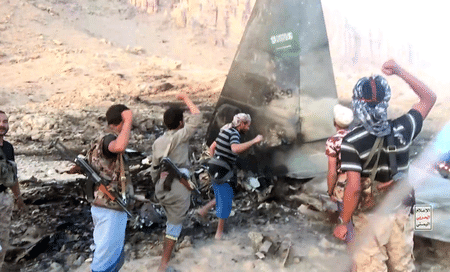
Iran-backed Houthi rebels have launched a missile attack on the headquarters of Saudi Arabia’s state-owned oil giant Aramco, damaging offices used by the company’s senior executives as fighting between Saudi-backed forces and the Yemeni rebel group intensifies.
According to regional officials cited by the Associated Press, the overnight strike targeted Aramco’s headquarters in Dhahran, eastern Saudi Arabia, damaging the building’s top three floors, including offices belonging to the company’s chief executive and other senior officials. No casualties were reported at the facility. Saudi Arabia’s energy ministry confirmed a limited fire at the building, while the Houthis had previously warned that they were targeting Dhahran with a ballistic missile.
The attack was part of a broader wave of Houthi missile and drone strikes targeting Saudi Arabia’s strategic infrastructure. The Saudi-led coalition reported intercepting two drones, four cruise missiles and a ballistic missile directed at Riyadh, along with additional missiles targeting Dhahran and the industrial city of Al-Kharj. In Riyadh, falling debris from an intercepted projectile injured one person and damaged property.
The latest escalation has raised concerns about regional security and global energy markets, particularly as Saudi Arabia faces repeated attacks on its oil facilities, airports and military installations. Riyadh’s King Khalid International Airport has been targeted multiple times over the past week, with attacks killing at least 18 people and injuring more than 300. Aviation operations have also been severely disrupted, with more than 3,000 flights cancelled or listed as not operating across Saudi airports during the past week.
The Houthis described their attacks as retaliation for Saudi military operations against rebel-controlled areas of Yemen, including the capital, Sanaa. Saudi-backed forces launched a major offensive approximately a week and a half ago, reigniting intense fighting after several years of relative calm. Houthi authorities reported that Saudi-led airstrikes killed two people at an oil facility near Yemen’s Ras Isa port, while additional strikes targeted fuel infrastructure in Sanaa.
The renewed conflict has also triggered a worsening humanitarian crisis. The International Committee of the Red Cross reported a sharp increase in casualties along Yemen’s front lines, particularly around Marib, the Red Sea coast and the besieged city of Taiz. The World Food Programme warned that more than 600,000 people in Taiz have become inaccessible to humanitarian assistance as fighting disrupts transportation routes and essential supplies.
Residents of Taiz have reported worsening shortages of food and fuel, while schools in the city have been ordered closed for a month. Continued bombardment and clashes have heightened fears among civilians, with many residents remaining indoors amid the deteriorating security situation.
Diplomatic efforts are underway to prevent further escalation. Senior Houthi official Mohamed al-Bukhaiti said Oman has attempted to bring the opposing sides back to negotiations, while Russia and China have also pursued diplomatic contacts through Iran. He indicated that the rebels would consider mediation aimed at achieving a comprehensive end to the war and blockade rather than a temporary ceasefire.
Meanwhile, Saudi Arabia is reportedly facing shortages of missile defence interceptors as it struggles to counter the Houthis’ extensive arsenal of missiles and drones. The kingdom has sought additional military assistance from allies, including the United States. President Donald Trump has said Washington is evaluating whether to participate in Saudi military strikes against the Houthis.
Analysts warn that the conflict could develop into a prolonged confrontation, with the Houthis seeking to increase pressure through attacks on critical Saudi infrastructure while Riyadh attempts to weaken the rebels’ military capabilities through sustained operations.
Amid the escalating violence, the United Nations confirmed the release of staff member Sami al-Kalabi, who had been detained by the Houthis since June 2024. However, 71 other UN personnel remain in Houthi custody, highlighting the continuing risks facing humanitarian workers in Yemen.
The latest attacks have intensified fears of a wider regional confrontation, threatening global energy supplies, disrupting international aviation and deepening Yemen’s already severe humanitarian emergency.

