













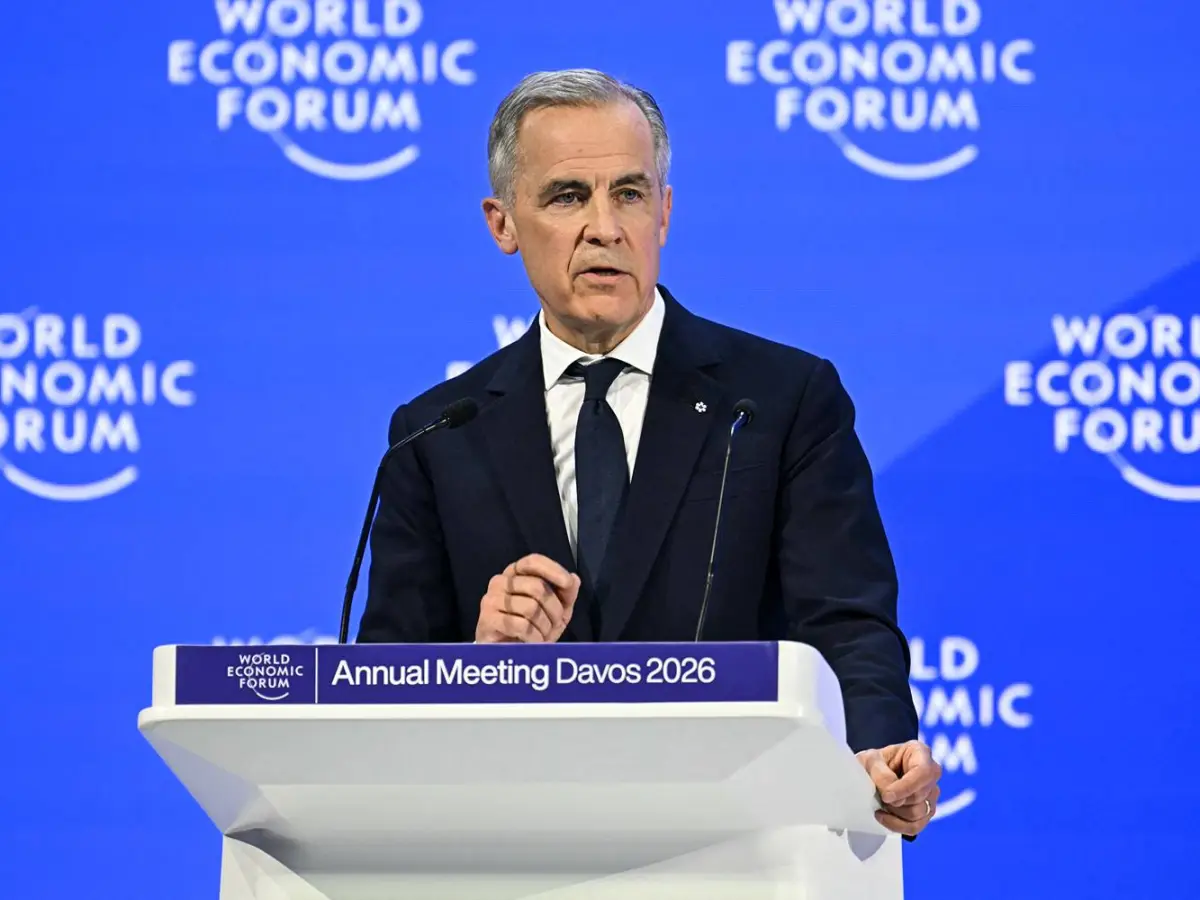
Prime Minister Mark Carney says Washington has softened its demands on key Canadian priorities, bringing the two countries closer to a potential trade agreement.
Prime Minister Mark Carney has indicated that Canada and the United States are making headway in trade negotiations, with Washington reportedly easing some of its demands and showing greater willingness to compromise.
Speaking on the sidelines of the Commonwealth Heads of Government Meeting in Antigua and Barbuda on Tuesday, November 3, Carney said discussions had become more productive, although significant differences remain before a deal can be finalized.
“They’re asking less and they’re offering more, but we’re not quite there,” Carney said.
The prime minister noted that negotiations have intensified following the breakdown of trade discussions in August, when disagreements over Canadian sovereignty and trade policies brought talks to a halt.
According to Carney, the United States has since reconsidered its position on several issues Canada had identified as non-negotiable.
Among the earlier points of contention were Canadian regulations designed to promote the visibility of French-language programming on digital streaming services, including Netflix. American negotiators had also sought to limit Canada’s ability to pursue independent trade agreements with other countries.
Carney said those demands are no longer part of the negotiations, describing the shift as a positive development.
“Those are now off the table. That’s very welcome,” he said.
The renewed momentum follows a weekend conversation between Carney and U.S. President Donald Trump, during which the two leaders discussed the future of bilateral trade relations.
Trump also suggested during a Tuesday interview with Fox News that his administration was approaching a trade agreement with Canada.
The developments coincide with the U.S. midterm elections, as Republicans face mounting political pressure over economic concerns, including rising living costs, tariffs and the impact of the war in Iran.
Despite the progress, several contentious issues remain unresolved. The automotive sector is expected to be a major obstacle, having previously contributed to the collapse of negotiations in August and the subsequent imposition of additional tariffs by both countries.
Carney did not specify which outstanding disagreements continue to prevent a final agreement.
The prime minister also confirmed plans to meet Trump later this month in China during the Asia-Pacific Economic Cooperation (APEC) summit, potentially providing another opportunity to advance negotiations.
While both leaders have expressed optimism about reaching a deal, Carney emphasized that further negotiations will be necessary before Canada and the United States can settle their remaining differences.

