













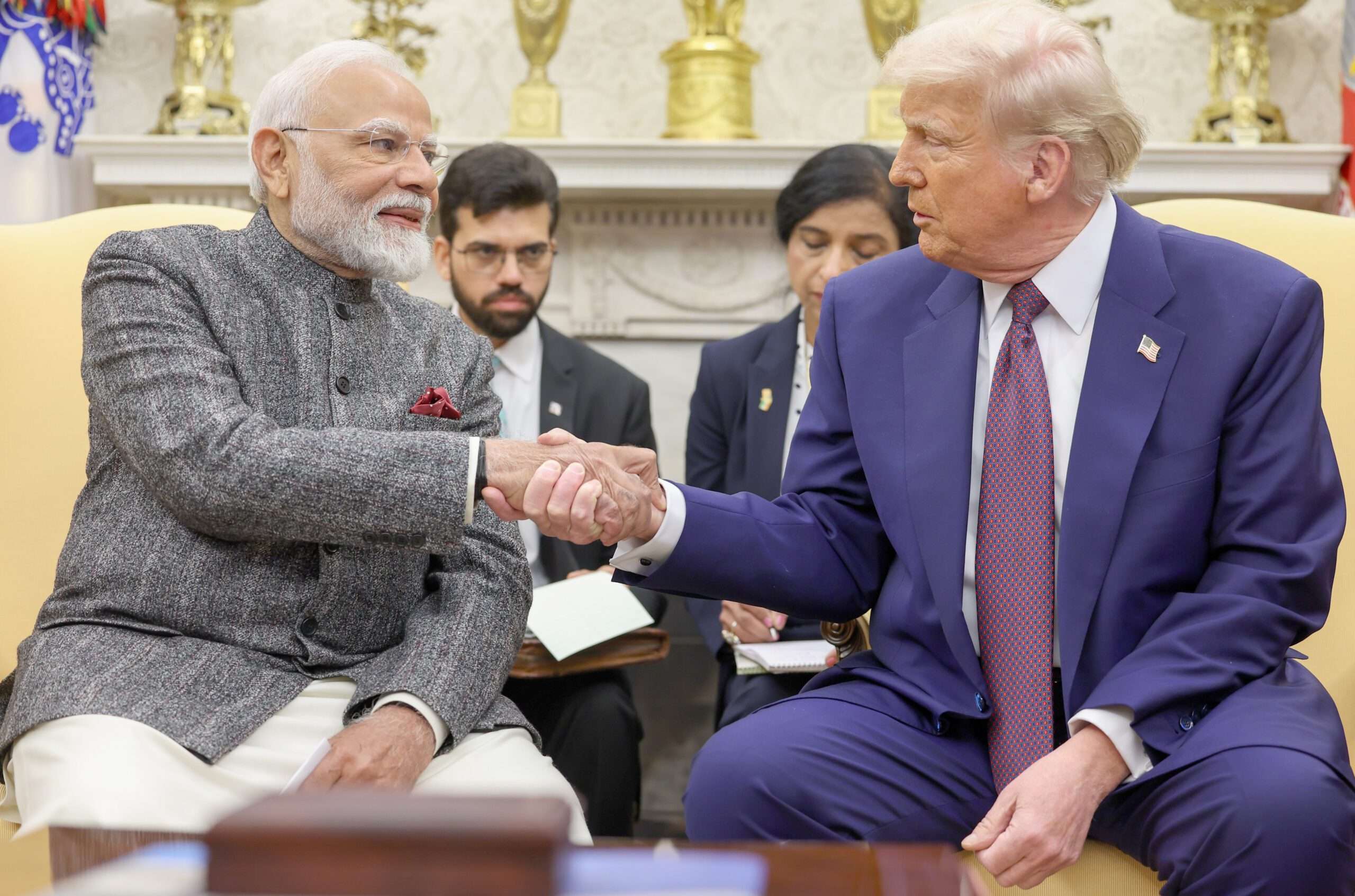
The Bharatiya Kisan Union (Charuni) has stepped up its opposition to the proposed India-U.S. trade agreement, with farmers staging protests in Haryana’s Kaithal district and announcing a nationwide meeting of farmer organizations and social groups on June 25 in Chandigarh.
Hundreds of farmers gathered in Pundri town on Tuesday under the banner of BKU (Charuni), where they held a meeting before marching to Ahluwalia Chowk. Protesters raised slogans against the proposed trade pact and burned effigies of Indian Prime Minister Narendra Modi and U.S. President Donald Trump, demanding that negotiations be halted.
The protest meeting was chaired by BKU (Charuni) district president Gurnam Singh Faral and attended by local farmer leaders and union members. The march was led by BKU Youth State President Vikram Kasana.
Addressing the gathering, Kasana warned that the proposed trade agreement could have significant consequences for India’s agricultural sector. He announced that farmer unions and social organizations from across the country have been invited to attend a national-level meeting at Kisan Bhawan in Chandigarh on June 25 to discuss the issue and determine future action.
“We will discuss the potential impact of the proposed trade deal and decide our next strategy,” Kasana said.
Farmer leaders argue that the agreement could open India’s agricultural market to greater imports of American farm products, placing small and medium-sized Indian farmers at a disadvantage against larger and heavily subsidized U.S. agricultural producers.
Kasana said most Indian farmers operate on small landholdings and would struggle to compete with large-scale American farms if market access is expanded under a new trade arrangement.
BKU leaders also expressed concern about the potential reduction or removal of import duties on products such as cotton, sorghum, soybean oil and orange juice, warning that domestic producers could face increased competition from foreign imports.
District president Gurnam Singh Faral further alleged that the proposed agreement could lead to increased imports of American dairy and poultry products, creating additional challenges for Indian farmers and livestock producers.
Farmer organizations also raised concerns about the future of India’s Minimum Support Price (MSP) procurement system. Leaders claimed that any changes affecting MSP-backed purchases could have serious implications for farmers in states such as Punjab and Haryana, where government procurement plays a central role in agricultural incomes.
The June 25 meeting in Chandigarh is expected to bring together representatives from multiple farmer groups and civil society organizations as opposition to the proposed India-U.S. trade deal continues to grow.

